Month: March 2021

  • New OC9 Audio Technica cartridge range discussed – OC9XEN reviewed.

    New OC9 Audio Technica cartridge range discussed – OC9XEN reviewed.

    To go Moving Coil or not – ‘is’ this the question?

    Recently, Japanese cartridge manufacturer Audio Technica, re imagined their long-lived OC9 moving coil cartridge. In fact they ‘imagined up’ 5 replacements for it, all released together! They are all named OC9, quite differently to how things used to be done. Previously, versions 1, 2, and 3 had been released in turn over the last 30 odd years. The classic OC9 now has the following incantations (from least expensive to most expensive) starting from the XEB, then XEN (reviewed here), the XML, XSH and finally the XSL. Sounds confusing? It actually isn’t, as the suffixes are easy to remember acronyms. For example the XEN I have playing in the background now is an “Elliptical Nude” tip equipped version. The top of the range is a “Special Line Contact”, the one below, a “SHibata” etc. They all have an ‘X’ because they are ‘Xtra’ special….sigh. Hey maybe it’s not that simple…

    Whatever the naming regime, in my experience they all sound rather good, although quite different. For my money they don’t represent quite the bargain the previous single version OC9III did. If you were looking for a highly detailed, stunningly dynamic and very revealing MC, the previous OC9 did that wonderfully well for only $799. Now if you want that style of presentation you will need to bolt on the OC9XML. ML being an acronym for “MicroLine”. In the new line up of OC9 moving coil cartridges, this model is the least expensive one with a stylus shape that digs deep into the groove. Hence extracting the greatest majority of the data contained within. The XEN under examination here today is a more traditional nude elliptical. A nude elliptical is superior to a conical, but only a couple of notches up. This shape can extract a bit more ‘data’ by way of having a larger contact area within the groove. Being of ‘nude’ construction also helps with tracking as a full diamond tip is lighter than a small tip glued to a steel post (non nude type).

    In some ways this article is a shootout between my last cartridge review, the VM530EN, a moving magnet design and this OC9. These two are an equivalent stylus spec. I’m sure an MC versus MM comparison has been done before but these two make it easy. Well sort of easy. The OC9 is easy, with threaded holes in the cartridge body making the delicate and stressful job of attaching and aligning the thing so much easier. The VM530 as per my previous comments in this article, just absolutely sucks to mount. I guess that’s why it is mostly supplied bolted to a universal headshell ready to be bayoneted on in seconds to a suitably equipped tonearm. I feel for the workers at the Audio Technica factory who draw the short straw and have to spend a week in the VM500 section screwing these bloody things onto headshells.

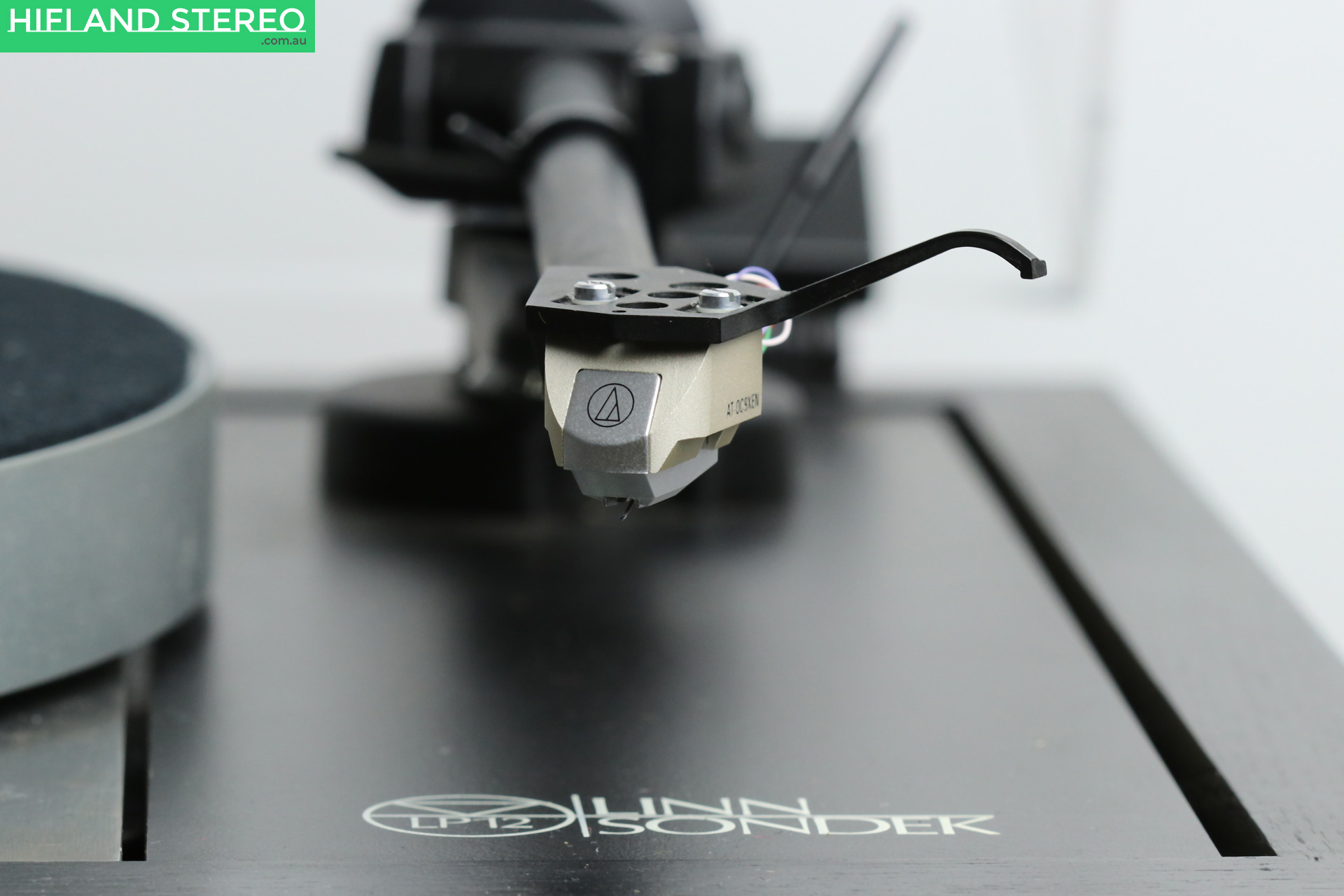
    OC9 mounted on Linn Sondek LP12 with Akito arm side view
    OC9 mounted on Linn Sondek LP12 with Akito arm tested by HiFi and Stereo

    The sound!

    Hey, both the OC9XEN and the VM530 sound very very nice. In this case the moving coil is definitely the ‘nicer’ sounding cartridge. It is, as mentioned above, unlike it’s more expensive brothers with fancier shaped tips. It has a sweet warm sound, not offering up particularly high levels of either detail or excitement. It is unlike the almost breathtaking performance of the XML version and those above it. If you are chasing a well-balanced, easy-listening cartridge that washes sound over you rather than setting you back in your chair, the XEN is the one. When I first heard one I immediately felt concern and ordered in the XML. After fitting the XML and sitting down to listen, my faith in the excitement factor offered by the OC9 lineage returned. It caused me to whisper to myself “I haven’t heard that before”. Choose the XML for a seat of the pants blast through the musical mountains, or choose the XEN for relaxing on the beach sipping a cocktail.

    Back to the VM530 versus the XEN… I reckon the 530 is actually the more interesting cartridge to listen to. It has an edge, an excitement factor, a punchier sound that appeals most of the time. It requires less from your system as it won’t need an extra external phono stage in most situations. It requires less input from your wallet too, at not much more than half the price of the XEN. This doesn’t imply the OC9XEN is a failure, but if you a looking for a quick exciting fix of vinyl the 530 absolutely does the job. It draws a nice line between information, dynamics and musical enjoyment without overly exposing your records wear and tear. Audio Technica have been making super good value for money MM cartridges for decades and the VM530 is an excellent example of that skill.

    The OC9XEN unfortunately, may be an example of trying to spread the OC9 magic a bit too thinly. They have taken a classic, well-known ‘shape’, and model name, and tried to maximise profit from that history with a flavour and price to suit everyone. In doing so, the OC9 has lost some of what it was. It no longer represents a moving coil cartridge with benchmark musical excitement at an entirely sensible price. Now it’s a range of cartridges at differing prices and sound qualities. For me it is actually all a bit confusing. Perhaps classic HiFi industry, marketing department, corporatized BS is at work. You know, the one where the accountant-style CEO flushes away the hard won, carefully engineered reputation of a long lived model with a sweep of a profit-driven hand.

    Back to the sound though, I still like what I heard from the XEN. It doesn’t represent particularly good value for money but it won’t hurt your ears. In fact, if your record playback system is a bit harsh sounding this might be the perfect choice.

    • For – A generous easy to listen to sound.
    • For – Excellent Made-in-Japan build quality
    • For – Easy to fit.
    • For – Looks cool on the end of your arm, your neighbour might think you paid $1399 for it!
    • Against – Not the most record playback excitement per dollar you can buy
    • Against – I feel like I’m being played by the Audio Technica marketing department a bit.
    • Price – $699 (fitting extra)
    • Distributor – TAG
    • Tested with – Older Linn LP12, Naim Star, Falcon LS3/5A

    And further…

    It is assumed by many that moving coil cartridges for turntables (record players) are always a step up from the somewhat universal moving magnet type. In many situations this is probably the case but there are extra steps required to get the best from them. Firstly a built-in MC stage in your amplifier is unlikely to be getting the best from what is generally a more expensive cartridge. Sure it will make a noise but MC cartridges output so little voltage that getting this delicate circuitry away from high current circuits such as an output stage is fairly important. An outboard pre-amp is highly desirable. You don’t necessarily have to purchase a high end one such as the EAR I reviewed recently but something along the lines of the Rega Fono MC is almost mandatory. The Rega has plenty of input matching adjustments so you can get the best from whatever MC cartridge you choose. Most built in phono stages that can handle MC do not have these tweaks. The Rega is just a damn fine sounding, well designed pre-amp for the price too. Typical Rega really in that regard.

    The other key difference is that MC cartridges are generally more expensive. They also most often have a fancier stylus shape. More expensive stylus shapes tend to get more information out of the groove which makes for a more interesting listen. As per the above review on the OC9XEN though, if the the stylus shape is just a run-of-the-mill, high quality, nude elliptical you may not end up with better sound than an MM cartridge fitted with the same.

    Another point of difference sometimes cited as a reason not to buy an MC is that the styli are not removeable. Some think this is an ‘issue’, because you can’t just buy a new stylus if your party gets out of control and Dave the drunk guy tears your tip off its cantilever. This is of course true but whether MC or MM, expensive shaped styli versions cost most of the price of the original cartridge. If your MC cartridge gets damaged you will have to fit a complete new cartridge or have it re-tipped. This generally costs between 80 – 90% of the price of a new cartridge as most suppliers offer a trade in deal on your old damaged one. In the case of the MM stylus being ripped from its base, sure you just fit a new one all by yourself. A replacement stylus for say the VM530 is still $229. Not a cheap mistake. I can also tell you that ratio (stylus versus original MM cartridge cost) is about as cheap as factory replacements get. Check out Ortofon pricing for replacement MM styli and it’s around the 80% mark as per moving coils.

    The bottom line is MM represents a sensible value for money record playing choice that is all most folk need, most of the time. An above average MM sounds really really good. A great MC fitment, properly executed will step you up to levels of detail and dynamics beyond what MM can achieve. MC can provide hair-on-the-back-of-your-neck standing up excitement that moving magnet in my opinion can’t quite deliver. You probably need to allow approximately 4 times as much cash to achieve this though.

    Oh and one final point, no matter whether MM or MC if you are to hear the benefits of a superior stylus, you will need a superior turntable/arm combination. Don’t fit a $1200 cartridge to an entry level Project or Rega. Within the Rega range for example you will want at least a P3 before you would contemplate fitting a Fine Line or Shibata equipped cartridge. Now, go and enjoy some music! Maybe with a beer!

    And onto the beer!

    Hoegarden –

    The pronunciation – Apparently its not Hoe Garden, its more Who Harga?? Or not, ask a local I suppose. Fortunately the inability to order one correctly in Belguim (where it is made) does not effect the flavour. This beer has been around forever (check the sticker wrapped around the neck!!) and is perhaps one of the very first rather good beers I tasted that sent me off down the rabbit hole of chasing new taste sensations in beer. Unlike other beers I have enjoyed for 30 years or more though, this one, has in my opinion, not changed in flavour at all.

    It pours with a substantial head that is light and fluffy and hangs around for a while. Flavourwise, first you will notice the bready goodness, then an extraordinarily great balance between hop, malt and then just plain old scrumptiousness. This beer is a reference for style (Whit, as in a white beer) for a very good reason. It has an airiness, a delightful perfection. Huge mouthfeel coupled with subtle spice. It completely lacks any nasty cloying sweet tang that a well known American made alternative has in spades. Perhaps not for drinking everyday but whenever I knock the top of one I am reminded that Australian craft beer is a modified V8, built in the back yard under a blue tarp and this beer, well its an F1 V12 machined from solid, in a castle, by geniuses!

    10/10. It’s liquid gold.

    hoegaarden whit being tasted by hifiandstereo
    The best Whit, it pours beautifully, tastes like heaven.
  • A new Australian built loudspeaker, with French flair! Microphase Towers reviewed.

    A new Australian built loudspeaker, with French flair! Microphase Towers reviewed.

    History – Who is Jean-Marie?

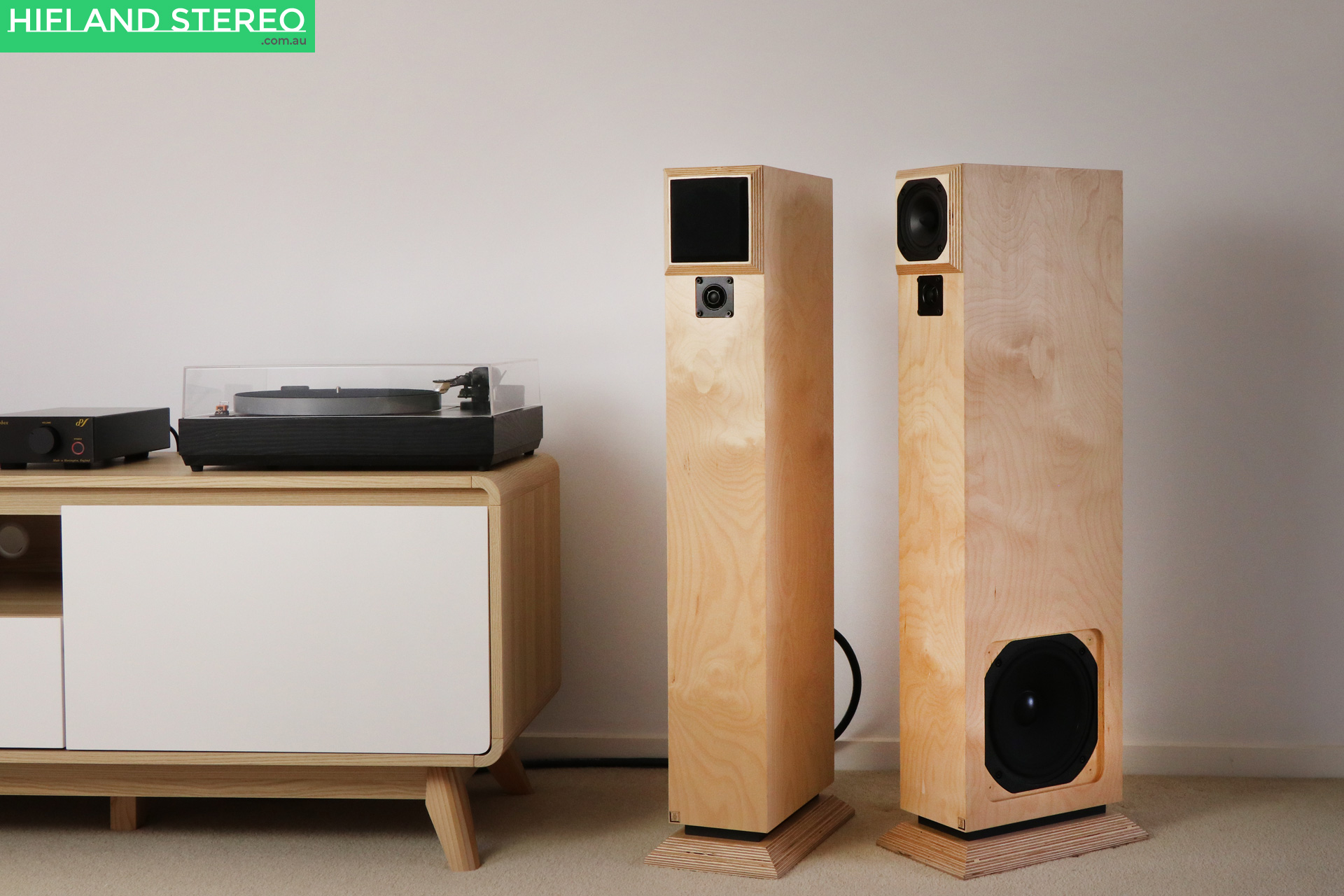
    Jean-Marie Liere, the creator of these somewhat offbeat towers started life in France. I say ‘towers’ but this size of speaker was once known as a floorstander (when a loudspeaker was too large to happily be placed on a shelf). During his time in France prior to exporting himself to Sydney, Jean-Marie worked for Hewlett-Packard. This was at a time when test instruments for loudspeaker measurement cost approximately the same as a small provincial cottage. How times have changed…Test equipment has now never been cheaper and houses are a similar price to tulip bulbs in Holland during the early 1600s! This free access to what was state-of-the-art test gear lead Jean-Marie off on a search for loudspeaker nirvana. The result was his first speaker design, a small monitor style speaker which he sold in commercial quantities. Some time later when his venture did not meet with his financial hopes and a family arrived, he returned to the reality of regular paid work. Sometime later in a land far away (post 1997 when Jean-Marie moved to Australia) a lifelong interest was rekindled. Jean-Marie’s interest in phase correct, fast sounding loudspeakers that offer life-like performance resumed with the current range of Microphase Audio Design loudspeakers. Back in business for the last 5 years, Jean-Marie has enjoyed fine tuning his 2 satellite models, a sub, a centre and the model on review here, the Tower One.

    Construction and Design

    The Microphase Tower Ones are built right here in Australia to exacting standards. The cabinet construction material is Birch plywood imported from Finland. The unusual, somewhat architectural look may not be to everyone’s taste but I rather like the style. Simple, functional and manufactured by a local cabinet guru who once made enclosures for Richter and Orpheus back in the day. I’m not sure when these two highly regarded manufacturers stopped making their loudspeakers here on home soil, but I don’t believe they do anymore. Moving on to the ‘innards’ of the design, we find more ‘French flair’ (more than being created by a Frenchman). French made Audax drive units abound. Coincidentally Richter and Orpheus also used Audax drive units in many of their designs. They are great sounding drivers in my opinion. Not only my opinion but in the opinion of designers at Spendor, the BBC and Mission over the years. Speaking of the BBC it should be remembered that many BBC designs such as the LS3/5A employed Birch ply as the cabinet construction board too. All in all Jean-Marie would appear to have made some well regarded choices in materials for his designs.

    microphase tower one reviewed by HiFi and Stereo Australia
    Microphase Tower One reviewed by HiFi and Stereo Australia

    More on design…

    Whether you like the look or not, one cannot doubt the build quality of these loudspeakers and the likelihood they will last a very long time. Beautifully fitted together with all components flushed into the front, rear and side baffles. Neat magnetically attached grilles are employed for the side mounted woofer and front mounted mid. The tweeter is kept reasonably safe from interested fingers by a tough plastic ‘acoustic lens’. Bi-wiring is available at the rear by familiar looking 5 way binding posts. Sometimes I wonder what the fourth and fifth ‘way’ are? I’ve got 1) Spade connectors, 2) Banana connectors, 3) Bare wire, 4) Not sure, 5) Don’t know. Anyway, if you wish to drive the woofer with a separate amp you can. Or you could just run separate wires to it from the common point of the speaker terminals on the rear of the amp. Your mileage may vary but for me bi-wiring in this way is right up there with propping your speaker cables up on supports. Bi-amping on the other hand may well help improve the sound, although at some considerable cost. To sum up, these Towers are smart and modern looking. Perhaps one well out on the periphery of what many would consider typical loudspeaker design.

    And the sound!

    Now the fun bit. I didn’t run them in as Jean-Marie supplied me a pair that had done a bit of work and were fully loosened up and ready to rock. I applied signal via my Naim Star and some files from Tidal. I am very familiar with the sound in my room having used this source on a number of other loudspeakers. I thought therefore, this was a good place to start and hear what the general flavour of the Microphase speakers was. I kicked off with some tracks from kd Lang’s ‘All You Can Eat’ (as mentioned in my article on well recorded music). Immediately it was obvious from the ‘smack’ from the drums that these speakers are fast and are quite sensitive, or at least as sensitive as the spec suggests. A decent amount of detail was obvious and the bass was quite uncoloured. The bass on this recording can be overly full on some speakers but not here on the Tower Ones. The upper treble was in balance with the rest of the spectrum doing just what it needs to do and nothing more. These are not sizzly sounding loudspeakers with exaggerated treble.

    Wishing to explore the bass extension I flicked to Nusratt Fatah’s, ‘Sea of Vapours’ on the Musst Musst album (also mentioned in my 10 best demo tracks article). This track dives deep with electronic bass going way down. I also noticed on this track a great sense of ‘air’ but as mentioned previously, without any excessive sizzle from the tweeter. Bass-wise I expected it may go lower than it did due to the largish bass unit and the sealed alignment (rather than the far more common bass reflex alignment most designers employ). Sealed alignments roll off more slowly and tend to offer a more accurate bass response than the sometimes boomy ported alternative. When I took a closer look at the probable box volume though I realised this isn’t really a very large loudspeaker enclosure. I made a quick comparison with another loudspeaker I had on hand that also sported a sealed bass unit design and although a different shape, it offered a similar internal volume. The Microphase towers comfortably outperformed these speakers, not so much in extension but in sensitivity.

    Moving onto the delicate midrange area, I played Meav, once again from my demo suggestion article. Her voice has a glass like quality and the ability to upset many a loudspeaker. To some degree the Tower Ones suffered at Meavs voice as well. Just a trace of a hard edge, or maybe some otherwise well hidden resonance was excited by her demanding vocal. I’m not sure, but suffering at the hand of Meav does not place these speakers into some ‘Robinson Crusoe’ like group. I have heard many a well regarded speaker show off some nasties when she is played. Hence a great test I think. Playing a variety of other material I did notice the occasional ‘cupped hand’ like colouration in the mid which for many will go unnoticed but for some may be an issue. Overall the sound of these speakers is rather refined with quite an even frequency response and an enjoyably painted stereo image.

    Sum up –

    Microphase side mounted woofer picture
    The Microphase Tower One with grille removed from side mounted woofer

    Sum up –

    For anyone looking for something a bit different. For those wanting a loudspeaker of bespoke appearance and build quality, the Microphase Tower Ones are worthy of audition and closer inspection. I enjoyed their time in my listening area for their iconoclastic style.

    • For – Unusual and quite unique cabinetry.
    • For – Built in Australia to last!
    • For – High quality components used throughout.
    • Against – As much as I like the appearance some who saw them while under review were unsure.
    • Against – Some slight edginess/resonances around the upper midrange area could be distracting on some material.
    • Against – Just an observation but there is no facility for spikes to be fitted in the underside of the plinth.
    • Manufactured by – Microphase Audio Design, Sydney, Australia.
    • Dimensions – 195mm Wide x 340mm Deep (plinth) x 955mm High
    • Weight – Approx 10kgs each
    • Price – $4290pr inc shipping to anywhere in Australia
    • Tested with – Naim StarStraightwire Symphony 3 speaker cables.

    Beer!

    3 Ravens American Pale Ale. The beer style that pretty much started US based craft brewing. It is owed a lot. I set out to buy something brewed in France for this beer tasting for no particular reason other than Jean-Marie comes from there originally and reckons French beer is fantastique! Alas with the local craft beer scene going mental, and the main stores actually stocking decent beer, European alternatives are very thin on the ground. I visited three stores with no success. I could have gotten close with a few Belgians of some distinction but I’m pretty sure Jean-Marie would agree, Belgium ain’t France. It would appear I am now stuck drinking craft beer if I fancy something fresh and tasty.

    So being forced to drink crafties, I thought I’d grab something of quality. A relatively local one in this case, made in Thornbury, Melbourne. I chose this particular one due to the outrageous statements on the side of the can. Very clearly printed in alternating blue and red Arial. Well, some Sans Serif font that is rather basic in appearance. I can report that what is contained within the can is anything but basic. As you may have noticed from the pics, not a lot of head, and frankly not benchmark setting mouthfeel but that’s the only negatives I can express. This is one damn fine and complex APA. Very much a hyped-up version of Sierra Nevada Pale Ale which is probably still the reference beer for the style. Terrific balance of malt and hops, probably more hops than malt but not enough out of whack to annoy. I mean, you want more hops right? Well this beer delivers. As much in bitterness as late additions, mmm yummy! I can’t see an alcohol content number on the can but it states 1.6 standard drinks so I guess about 5%. (Edit – found it in large print – 5.5%) No nasty aftertaste, and as mentioned, very satisfying levels of complexity. It keeps you guessing as to what you are in fact actually tasting. This is old school APA goodness, nice and fresh and ready to be smashed down 3 at a time. A solid 9 out of 10 from me. Only let down by lack of body/head. Buy some now before they decide to stop making it again.

    3 ravens american pale ale can and poured glass
    3 Ravens American Pale Ale can and beer poured into a glass