Category: Opinion

  • YOUR HIFI DOCTOR – CREATE A HEALTHY RELATIONSHIP

    YOUR HIFI DOCTOR – CREATE A HEALTHY RELATIONSHIP

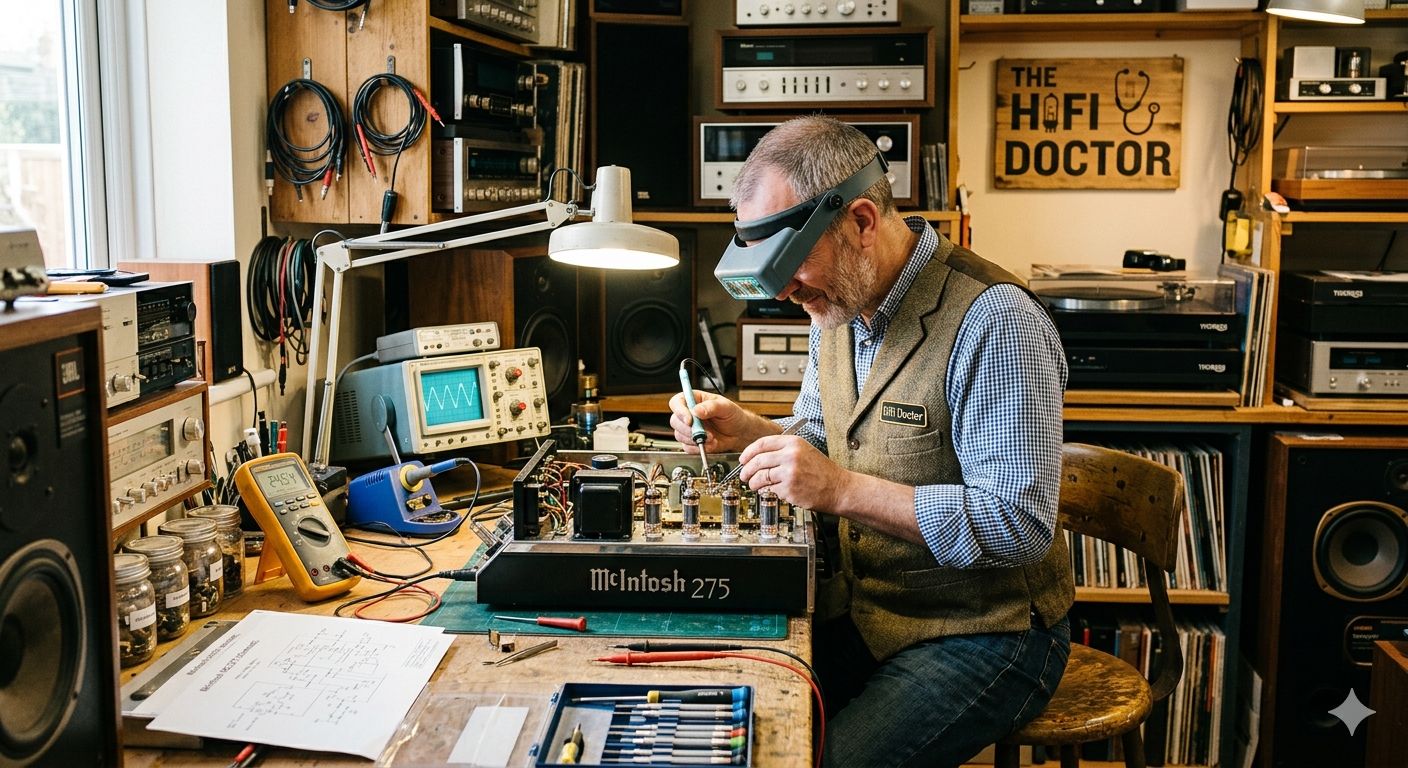
    Vintage HiFi is like the human body or a classic car. It’s had some years, done some mileage, maybe hasn’t been looked after in a text book fashion. Or maybe it’s just feeling its age. But you love it and you want it to keep going for as long as possible.

    40 year VS 20 years

    40 years vs 20 years. When it’s not working quite right, you take your 40 year old body to the doctor and your 40 year old car to the mechanic. You describe a symptom. The symptom may be brand new, or something you’ve been ignoring until you can’t ignore it any more. If your body was 20, the doctor would just treat the symptom and send you on your way. But, because you’re 40, it’s much more complex. The symptom can be more difficult to diagnose, more difficult to treat and there may be more than one underlying problem to find causing the symptom you’re experiencing.

    Vintage HiFi is exactly the same. Our head technician was working on this HiFi equipment when it was 20. It was so much easier to fault find and repair then. Now, there are often multiple faults leading to the one symptom. Just like a vintage body, there will be other small faults that occur in the future. No technician can successfully predict what the next symptom will be, or when. They can only treat what they can see or hear now, taking your description of the symptom into account and using experience and expertise to figure out the puzzle.

    The most common statement. The most common statement from vintage HiFi owners when dropping their equipment in for repair is “It was working perfectly until…” The rest of that sentence is, of course, “until it wasn’t”. When discussing the symptom, we often find that there have been symptoms over time that have been ignored or are not serious enough to seek help for. There is an expectation that because it has been working (fine) in the past, that there is something simple causing the lack of working (fine) now. If you’re lucky that could be case. Often, the case is much more complex and small faults have been building up to create what you now experience.

    AI is not a solution

    Before you go to the doctor, you may Google the symptom. Google seems to always give you the worst case scenario or completely down play the symptoms. Nothing in between. That’s because human health is not an exact science and neither is HiFi forensic repairing.

    You may attempt to cure it yourself based on the “expertise” of the great Google. This may work, work temporarily, not work at all or make things worse. This is the same for the human body as it is for vintage HiFi. In fact, it’s the same for HiFi of any age.

    Symptoms are important

    Symptoms. One important factor is the description of the symptom. Describing to the doctor a cough when it’s a whine or a rattle when it’s a hum is going to send them off in the wrong direction. They may spend time trying to diagnose the cause of a symptom that isn’t there, or isn’t the main problem. Being accurate and thorough when describing your symptoms will more likely end in a successful diagnosis.

    Repairing the fault, not the machine.

    If you love it, repair it. We love your vintage HiFi equipment as much as you do. The aesthetics, the high quality designs and mechanisms, and the sound profiles are all what makes them special. Often these pieces of history cannot be replaced with something new – like for like. If you love it, then have it repaired where possible.

    Repairing the fault not the machine. When our technician works on your HiFi equipment, he is repairing the faults causing the symptom you describe. He is not working on the entire machine, using a crystal ball to predict the future or bringing the machine back to new. Sure, there may be some standard servicing done at the same time – faults that may be contributing to your symptom or historically occur in your brand/type of equipment. He is not testing every single component of your equipment for potential failure. A full refurb or “back to new” is a whole other category. If that’s what you want then you need to make that very clear and have expectations of cost that align with the amount of time required.

    Your technician will always test the component extensively. He will always test before returning it to you, and it may all be great at the time of testing. He will use records or CDs he knows. He will use components in our test system he knows are working perfectly. He will also use cables that he knows are perfect. How do YOU think a technician knows the component is now working well otherwise? Don’t be surprised if you query whether the technician listened to the component before returning it to you, and the response is just a little bit annoyed.

    Your guarantee guarantees your repair. It is rare, but sometimes you will take the equipment home and a couple of weeks later it is doing the same thing again or exhibiting some new symptom. This is particularly true of vintage. We understand that it is always the last person who touched the component who is blamed. But remember, the components are extensively tested before leaving the repair area. So there is every chance this is a new fault. Sometimes, it is actually something else in your system causing the symptom ie your speakers, cabling or physical set up.

    Of course, it does happen that a recurrence of a symptom will happen because even super-technicians are human. You are offered a guarantee to cover this human factor.

    Creating a healthy relationship with your HiFi Doctor

    Your technician, with all of his experience and knowledge is your resource to help identify the issues. This is not an excuse or an attempt to wriggle out of honouring a guarantee. These are the facts with vintage HiFi and an understanding of these facts will go a long way towards creating a healthy relationship between yourself, your equipment and your HiFi doctor.

  • Is AI reshaping or ruining HiFi?

    False authority – how AI is affecting HiFi purchasing decisions. The risks, myths and realities of AI shaping musical taste and consumer choices.

    GAS – Gear Acquisition Syndrome: the psychology behind constant upgrading.

    The 3 main types of audio lovers – which one are you?

    What really happens in HiFi retail and why real listening is more important than ever.

    How the HiFi industry is imploding from in-fighting, factions & tribalism.


    LISTEN NOW on Not an Audiophile the Podcast – Full Episode on Not An Audiophile.com or on all good podcast platforms.

    Andrew Hutchison and David Corazza discuss AI in HiFi, Dirty Audiophiles, GAS & more

  • How to buy a HiFi system – Misconceptions, Preconceptions, HiFi Forums & Misinformation

    David Corazza and Andrew Hutchison discuss the influence of media in your HiFi choices. Are you hearing the system or the opinion of others? In Part 2 they discuss the 10 (or 12 or so) things every turntable owner should know about this complex “simple” HiFi component.

    LISTEN NOW on Not an Audiophile the Podcast – Full Episode on Not An Audiophile.com or on all good podcast platforms.

    Andrew Hutchison and David Corazza discuss Misinformation around how to buy a HiFi System

  • HiFi Myths blown up with actual facts

    Chapter 1 Myth No. 1 FULL RECAPS!!!! A rant from a qualified audio/HiFi technician with 40+ years of experience.

    Chapter 2 Myth No. 2 LIQUID STYLUS CLEANERS WILL DAMAGE YOUR STYLUS! Ask AI or any “expert” online and they will perpetuate this myth as truth.

    Chapter 3 Myth No. 3 YOU CAN’T HEAR GOOD SOUND AT A HIFI SHOW! HiFi Shows are compromised spaces due to many factors but so are many domestic listening spaces.

    Chapter 4 Myth No. 4 STREAMING IS ROBBING MUSICIANS! Facts and history prove this is not the case, no matter how adamant musicians may be.

    Chapter 5 Myth No. 5 BUYING DIRECT IS DRAMATICALLY CHEAPER THAN BUYING RETAIL! Watch out while two HiFi professionals use facts and experience to bring out the truth.

    LISTEN NOW on Not an Audiophile the Podcast – Full Episode on Not An Audiophile.com or on all good podcast platforms.

    Andrew Hutchison and David Corazza blow up HiFi Myths

  • D.I.Y HIFI REPAIR DISASTERS – WHY NOT TO D.I.Y.

    From the Technician’s Bench – Why not to D.I.Y your HIFI and Audio Equipment repairs

    Why not take on your own D.I.Y. HiFi repairs? You have an understanding of how it works, you like to dabble in electronics. There’s Google and You Tube. How hard can it be?

    YOU TUBE VIDEOS – A quick note on YouTube videos showing you how to fix your model or one similar. We all know that if it’s on Google it must be true, right? If only life was so simple. The limitations of YouTube means the “expert” will show you one cause of your symptom and then with “authority” show you how to fix it yourself. You think you will save big $ and learn a new skill.

    However, be assured there is often more than one cause of any one symptom in any model of electronics. The reasons are varied, and not limited to (a) different climates affecting the ageing of equipment. For example, audio equipment in Queensland ages much faster due to higher temperatures and much higher humidity. (b) Dust exacerbates the ageing process as does animal hair (c) the unit being left on unnecessarily (d) the unit being jammed into a too tight space in a cabinet causing it to run even hotter than it otherwise would. (e) playing too hard too frequently. (f) not repairing a fault when it is first experienced which then causes other faults (g) guests (housesitters particularly) unfamiliar with the equipment (h) children attracted to the shiny bits (i) removalists…..

    Rarely do these causes just affect one component in your equipment, therefore there is almost always more than one problem to sort out.


    LISTEN TO EPISODE 044 NOT AN AUDIOPHILE the PODCAST – A discussion including the risks, myths & realities of AI “advising” on HiFi purchase & repairs.

    I get it. Your little internal voice says “There’s probably nothing much wrong with it, just a fuse or something immediately obvious when I lift the lid”. I understand the desire to get your equipment going again (a) right now and (b) inexpensively. However, I can assure you that from my experience D.I.Y repairs are almost always a disaster.

    As a qualified audio technician with 40+ years experience, I can occasionally think I’ve seen it all. Then another job comes in accompanied by the statement “I just had a quick look myself, but couldn’t see anything obvious”. Upon first glance the experienced eye immediately notices the carnage caused by the innocent “quick look”. This carnage may not be obvious to the casual observer as the nature of electronics is not really a visual fault-finding exercise. Almost always the cause of the symptom – be it a crackle, intermittent sound or no power are a component failure invisible except with a multi-meter, more time than you would like, and years of experience.

    Standard D.I.Y. carnage can consist of damaged flat wire looms or missing and incorrectly placed screws. Or loose screws rattling around in the bottom of the chassis randomly shorting things out either on the quiet or with loud cracks and smoke. Components are being replaced that don’t need replacing, incorrect components are used or components are returned into incorrect positions. Wiring is a fire hazard and soldering doomed to failure.

    Now, I don’t want to cast aspersions on everyone who lifts the lid on their own audio gear. You may have some experience with pulling things apart and checking for the obvious. You may be able to do this without leaving a trail of destruction, and that’s fine. My question though is what were you going to do once you identified the visually obvious possible cause? The pain with electronic repairs is that they are not repaired until they are repaired. There can be an obvious problem such as a burnt resistor or blown fuse. You can replace the resistor or the fuse but it will just go again. We have to find why it’s burned or blown. Replacing the damaged part is really doing no more than fixing the symptom, not the cause.

    Although I am an advocate for trying new things, I believe a person also has to know their limitations. I service my own vehicles to a certain extent. I don’t open the hood and start pulling parts out to see if I can figure it out myself then put the car on a trailer and drop it off at the mechanic to finish.

    Some of the complex repairs we have had recently would have otherwise been quite straight forward if the owners had not tried to make their own repairs. I include in some of these cases, owners who have taken their equipment to friends who had the best intentions. I also include those who have had repairs done by people from enthusiast forums with You Tube degrees in “technicianing”.


    The sad D.I.Y. story of a beautiful vintage amplifier.

    Once upon a time… A beautiful vintage amplifier came in where the main circuit board had unnecessarily been removed and refitted so many times that wires had been broken off – In some cases invisibly – then roughly resoldered back on in the incorrect positions.

    Original symptom – The original fault/complaint in this case was a super simple fix we have seen many times over the years.

    In a lot of cases the service manual for vintage equipment consists of a PDF of a fax of a photocopy that has been used as a coffee coaster for years. This often is the only reference for where the wires really might belong. The fact that all the components are in the incorrect place makes the repair of this machine difficult, frustrating, expensive and ultimately, not always possible.

    Result – amp written off as the incorrectly positioned wires had done so much damage it was simply too time consuming to sort out.


    A 5 minute fix became a 3 hour turntable DIY repair disaster.

    The owner of this turntable had decided that the reason the arm was not tracking correctly had something to do with the bearing adjustments. They proceeded to undo screws all over the arm and generally create a multi-hour, re-calibration of the arm from the ground up.

    Original fault – The actual fault was just that the cueing lifter was set incorrectly so it was touching the lower edge of the arm tube.

    Result – A 5 minute fix became 3 hours and a costly repair bill.


    A DIY screwdriver screwup.

    An obviously frustrated owner tried to take apart a rather smart and cool-looking receiver with a large blade screwdriver. The cabinet has many hidden screws, sliding panels etc which a technician would be aware of. What was immaculate was a mess by the time it came to us.


    An intermittent crackle went up in smoke

    A well meaning D.I.Y’er unnecessarily changed the speaker relay because the internet said they always play up. He actually did quite good soldering work during the process. However, the output transistors were unnecessarily removed to enable access to the underside of the circuit board. Upon reassembly they were put back in the opposite locations. When it was brought to us, the owner reported quite a lot of smoke.

    Original fault – a simple intermittent crackle. At worst, this would have been an approx $600 repair.

    Result – repair price tripled as so much time had to be spent fixing the D.I.Y. mistakes as well as the initial fault.


    THE FICTION OF RECAPPING!!! – This is not the quick fix for all ills. Apparently, according to the internet, the cause of almost every issue in older, perhaps “vintage” equipment is electrolytic capacitors.

    ‘Electros’ cause no more problems in most electronics than transistors, other styles of capacitors, resistors, dodgy soldering, general wear and tear, transport damage, playing the system into distortion etc. Recapping is the most silly, over-used term I can think of in audio electronics.

    Sure there are a few “eras” of gear that tend towards having faulty electros as manufacturers were supplied faulty and sub-standard batches. Most notably early SMC electros, Chinese filtering caps of the early 2000’s and probably quite a lot of small value caps of the late 90’s as well. Rarely does this require a “recap”. If you have any technical knowledge at all, you will just trace and replace the faulty ones, usually of just one particular value.

    Vintage gear of the 70’s and 80’s, with the small signal transistors of the era are much less reliable than the Japanese capacitors that rarely play up. No one is talking about a “re-transistor” of everything though. One sure fire way to ruin the sweet sound of your beloved older amp is to “recap” it willy-nilly. It’s just not that simple.


    We want what you want. We just want to fix your amp, turntable or speakers as economically and reliably as possible. The hardest fault to trace is the man-made fault.

  • 5 MUST HEAR TRACKS – Music for your system

    S2 EPISODE 021 Music. 5 best tracks/albums; 2 HiFi Professionals and 1 opinion party.

    Two HiFi Professionals with polar opposite tastes in music discuss what to listen to

    (a) when testing speakers;

    (b) at a HiFi show;

    (c) when designing speakers.

    (d) get the best of our your system

    What tracks/albums you should know to have an educated conversation about music and the 5 best tracks/albums according to David who chooses classical, sometimes bizarre and always interesting albums and Andrew who prefers contemporary with an emphasis on happy tunes. You might discover something new or be reminded of something great.

    LISTEN NOW For the Full Episode on Not An Audiophile website or all good podcast platforms

    For the Tidal Playlist to accompany this episode Listen to Tidal Not An Audiophile Playlist

  • Getting started in vinyl playback – advice from an industry pro.

    Getting started in vinyl playback – advice from an industry pro.

    The turntable !

    Yes, you are going to need a turntable… There are probably three kinds of turntables out there – 1) New turntables of quality, probably starting at around $500. 2) New turntables of poor quality starting at around $50 and rising in cost to around $500. 3) Used turntables from the heyday of vinyl, say the 70’s and 80’s. These could be further divided into two groups, the all-in-ones (stereograms and 3-in-1s as they were known in the day) and proper turntables (HiFi turntables). Lets take a closer look at the various options.

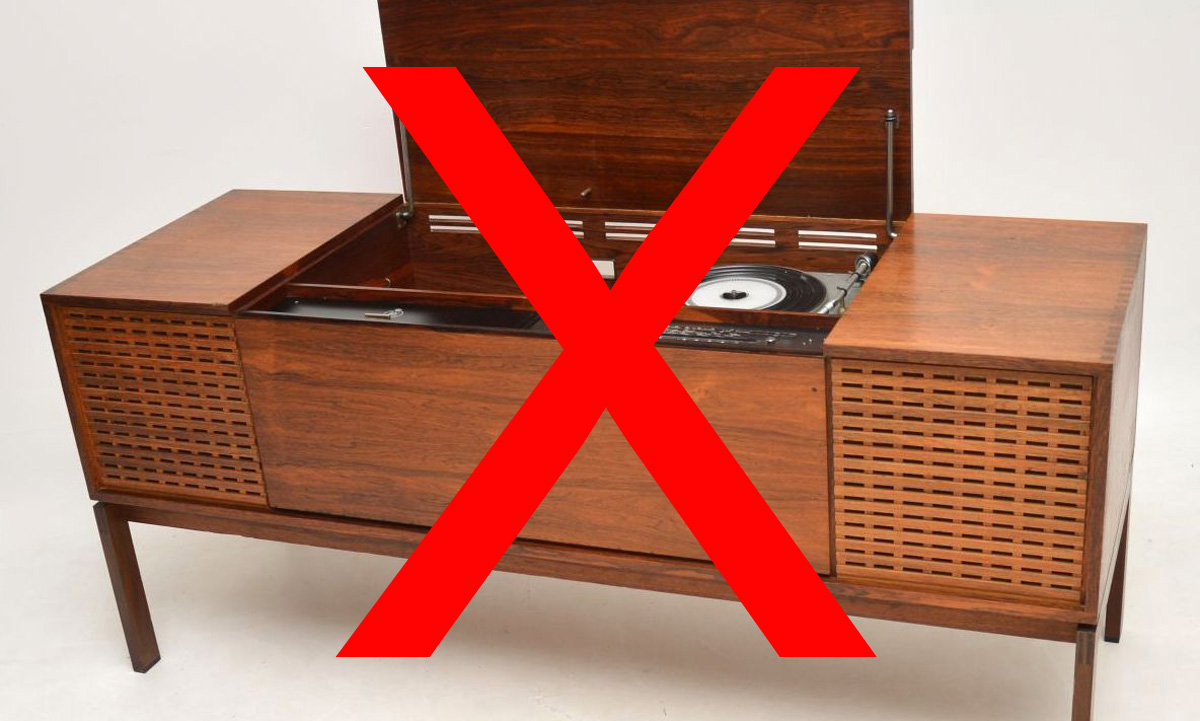
    Garbage record player with red X through it NOT recommended by HiFi and Stereo
    Words fail me, just don’t!!

    Lets briefly discuss stereograms, radiograms and 3-in-1s.

    They are all more or less the same thing ie. A record player, amplifier and speakers all in the one cabinet. In the case of the ‘3 in 1’ it was generally a turntable, receiver and cassette deck all in one chassis with a pair of speakers thrown in (they threw them in because they were valueless). If you are collecting records and would like to keep them in good nick and hear them at their best, you DO NOT want a radiogram. “Why? They look so retro cool” I hear you ask. Why? Because they were rubbish when they were new and have not improved with age like some kind of electronic fine wine. In this world where almost everything you can buy works, it is perhaps hard to understand the gulf of performance between a proper HiFi system of the 70’s and one of these all-in-one compromises. Some fast facts – Firstly they track at 3 to 4 times the tracking force of a quality modern turntable/magnetic cartridge combo and WILL cause wear to your records with every play. Secondly they sound dreadful. Thirdly they are the olde worlde version of the worst piece of crap you could currently buy, nothing more. They were the cheap music playback solutions of the 60’s, 70’s and 80’s and cool or otherwise now, they are worn out from sitting around and cannot be successfully repaired. They could possibly be rebuilt if you could find a tech that does that sort of thing but the cost to do the job properly is way more than just buying a decent new stereo. The result will still sound and perform poorly compared to other options discussed here. Just don’t!

    Marley turntable with red X through it NOT recommended by HiFi and Stereo
    Don’t buy one of these!

    Right! Now onto some less hipster cool, but superior sounding options.

    Used turntables from the good old days also have issues now that they are getting on in years. The fact is they are all around 30 – 50years old now. Even if little used over these years the materials they are constructed of will have in many cases changed their nature. Rubber parts will either be rock hard, have turned to goo or just perished away to dust. Oils and greases in theory all need to be removed and replaced with fresh. Wiring will be corroded and insulation hardened and inflexible. In regard to brand and model, all old turntables were not made equal. Just because it comes with a wooden plinth (or at least one covered in ‘wood look’ vinyl wrap) may make it ‘retro’ but it doesn’t make it a perfect device to play records on. Even if it is in excellent condition having been professionally rebuilt it’s performance will vary enormously from one brand and model to another. Some experience and research can help you with what’s good and what’s not but in the end price is largely indicative of quality. The bad news is, all the good ones are now bloody expensive! I note from my Googling that for example, old Thorens and Regas are bringing money far beyond the performance they deliver. The bottom line is that if you are buying a used turntable privately without warranty, be careful. Allow perhaps $400 approximately to have a repair tech bring it up to spec or fix any unseen issues. Oh, and there is no old, affordable turntable that sounds better than a new one dollar for dollar. So, once again you are sort of buying nostalgia.

    AT cheapy turntable with red X through it NOT recommended by HiFi and Stereo
    Don’t buy one of these either!

    Which brings us to cheap new turntables. I’ll keep this super simple – just DON’T !

    They simply don’t play records, don’t go there. ‘Things’ like Marley and Flea Market are best donated back to the Marley foundation or sold at a Flea Market. They don’t spin at consistent speed nor are the tonearms of sufficient quality to allow the stylus to track the groove properly. A nasty cheap cartridge does not help either. Sure they might kinda work out of the box but I have seen these close up and in pieces and the engineering is not pretty. The least expensive Audio Technica, Pioneer etc for $200 or less are also to be avoided If you are serious about maintaining your collection of vinyl in excellent condition. These inexpensive solutions sort of work okay but if you want to enjoy stunning sound quality you will need to spend more, but not much more.

    Quality affordable turntable IS recommended by HiFi and Stereo
    HiFi and Stereo highly recommend spending just a little more and get something great like this Rega.

    Quality turntables have never been cheaper!

    You can buy a simple Project or Rega brand turntable from high $400s to low $500s which is much the same price as they were 40 years ago. For the sake of a meagre half a pay check, buy a good turntable and you simply will not regret it. These things are simple, well made and will last almost forever. The difference in engineering quality between the previously mentioned new turntables and these is light years. I won’t get bogged down with which model from which brand. Visit a HiFi specialist or two in your area and take a listen to either of these brands (or Music Hall and maybe New Horizon). Prepare yourself to be impressed. Clean, lifelike sound with tight weighty bass, and a sweet midrange/top end. Less crackle and pop and more music is what you will also hear.

    Quality affordable turntable IS recommended by HiFi and Stereo
    Or also great value and performance like this Project.

    Between $500 and $1000 also represents the price range where small increases in price bring quite large and easy to hear improvements in performance. Do have a listen to a few alternatives and make sure you are happy with ‘entry level’ quality. It may be that a few hundred more spent now is actually a better investment for you as you improve the rest of your system. Save yourself the hassle of trading up later.

    Quality affordable turntable IS recommended by HiFi and Stereo
    HiFi and Stereo also highly recommends spending just a little more again and getting something a smidge better like this Dual (or a superior Rega or Project model).

    Of course, you will also need a stereo amplifier of some sort and a pair of loudspeakers. I will make some suggestions on what course to set for success with those purchases in a future article.

    By the way I’m a bit of a hypocrite as in a previous article I had terrific success with a new Audio Technica cartridge fitted to my Linn Sondek. The results are fantastic, but for the money the Linn owes me plus the new cartridge I could have had a P6 Rega (for example) which out-shines the Linn in a couple of areas of performance. The fact is I wanted the Linn for a variety of reasons including nostalgia. I always wanted one having spent a lifetime working on them. They do have a very charming sound as well, but the Rega is a sharper tool. Why wouldn’t it be being a 40 year newer design of good quality. I love my Linn though and won’t be trading it in anytime soon!

  • 10 hot demo tracks that are NOT audiophile recordings.

    10 hot demo tracks that are NOT audiophile recordings.

    It’s a shame that some of the best music ever made is not particularly well recorded. On the other hand, some of the worst music ever made is exceptionally well recorded. I’m thinking of the likes of Linn Records, Naim Records, Reference Recordings etc. You know, ‘Audiophile recordings’, the ones where the technical standards are high, and the ‘dull’ factor is even higher. There are fantastic recordings out there though, that will highlight your system’s performance and send a little shiver of delight up your spine, while still being produced by someone who has the music front of mind. These albums are not released on some ‘audiophile’ label, rather they just happen to be produced and recorded by a team that cared about the quality of sound. There are a few standards of this breed we all know such as Jennifer Warnes (of ‘The Hunter’ fame) and all sorts of things Donald Fagen and Walter Becker have been involved with over the years. I’m always on the lookout for new, less well-worn quality recordings, whilst also avoiding other old chestnuts such as Boz Scaggs ‘Dig’ and Dianna Krall (any album).

    Below, I have compiled a list of 10 alternatives. These recordings are all still first class and will make any decent stereo system sing. Musical taste is a very personal thing of course. You may not like a few or even most of the choices, but I hope you find at least something you like that you are not familiar with. I have included tracks from various styles, countries of origin and eras. Feel free to comment below on what you think of my choices. All the tracks are available on Tidal and no doubt elsewhere. Tidal’s version will sound the best (if you are streaming) due to their CD quality files. Google away and I’m sure you can dig these artist’s albums up in other places. Possibly even in the bargain bin at the local JBs. Enjoy.


    Bill Morrissey You'll never get to heaven album cover
    Bill Morrissey You’ll never get to heaven album cover

    1.

    Bill Morrissey – You’ll Never Get To Heaven – Track 8 – Different Currency. So here goes with my first suggestion. A difficult choice as I don’t want you basing your conclusions of my musical taste only on my first selection. They are all a bit different, but this one is definitely a folky, country, kind of thing. An amusing tune with Bills gravelly vocals beautifully captured. If you enjoy track 8 you will almost certainly enjoy the whole album. It’s all very well recorded with a clean, open, full sound.


    Gino Vannelli Wilderness Road album cover
    Gino Vannelli Wilderness Road album cover

    2.

    Gino Vannelli – Wilderness Road – Track 3 – Older N’ Wizer. Hey maybe its not the tune of the century, and Mr Vannelli is surely not everyone’s cup of tea with his somewhat corny songs. However the opening bars of this are a delight (and some would say that the closing bars are even better…). A delicious recording, a must listen, even if for only 30 seconds.


    Nusrat Fateh Ali Khan Mustt Mustt album cover
    Nusrat Fateh Ali Khan Mustt Mustt album cover

    3.

    Nusrat Fateh Ali Khan – Mustt Mustt – Track 1 – Mustt Mustt. The Pakistani legend is in fine form here with interesting tunes that perhaps ‘crossover’ more successfully than most of his material. The recording quality is very high. His voice is spectacular, there is a great sense of ‘air’ and the bottom end goes very deep on some tracks (try track 6 – ‘Sea of Vapours’). Mustt Mustt is the most immediately catchy track though. The Massive Attack remix of Mustt Mustt (the last track – 11) is worth a listen, especially for those wanting to run in a new subwoofer!


    k d Lang All You Can Eat album cover
    k d Lang All You Can Eat album cover

    4.

    k.d. lang – All you can eat – Track 10 – I Want It All. k.d’s incredible voice is on display here in full colour but is backed up by some cracking drums as well. The whole album is a gem. Try track 2, ‘Maybe’, if you would like a slower pace with a touch of country. An all-round magnificent album with a clean sound and strong, taut bottom end.


    Skunkhours Feed album cover
    Skunkhours Feed album cover

    5.

    Skunkhour – Feed – Track 3 – Up to our necks in it. Once again a nicely recorded vocal, a hooky tune coupled with some cool bass and quite a sense of space. There are other tracks on the album that are also enjoyable but the style moves around quite a bit. Some tracks you will love would be my guess, while others…


    Meav Meav album cover
    Méav Méav album cover

    6.

    Méav – Méav – Track 10 – One I love. A spectacular and delicate voice. This suggested track is pretty much all about her Irish lilt. There is little instrumental backing and really nothing else is required. Worth a listen for the purity of her voice and what is a very clean, open and lifelike recording. When it comes to Irish female vocalists I’m also a fan of Mary Black. Mary has been somewhat overplayed in audio circles but If you aren’t familiar take a listen. ‘Babes in the Wood’ is a great album to kick off with.


    Quincy Jones Qs Jook Joint album cover
    Quincy Jones Qs Jook Joint album cover

    7.

    Quincy Jones – Q’s Juke Joint – Track 9 – Do nothin’ till you hear from me. The production legend is at his best here as he tackles a studio follow-up to ‘Back on the Block’. I’m not going to tell you who sings on the suggested track, just take a listen and soak up the atmosphere so successfully recorded here. If you are looking for something to listen to just before bed…. then take in tracks 11 and following it up immediately with 12. Best listened to with your partner…


    Gyan Gyan album cover
    Gyan Gyan album cover

    8.

    Gyan – Gyan – Track 3 – Straight Lines. There are more than hints of straight ahead old Aussie pop/rock here… BUT it is very nicely recorded and with some serious style. Lets not forget Gyans impressively sweet and capable voice as well. This album makes you wonder why one artist has a hit album and the next completely flies under the radar, as this album largely did.


    Jeff Lang Chimeradour album cover
    Jeff Lang Chimeradour album cover

    9.

    Jeff Lang – Chimerdour – Track 12 – The Janitor. This track starts off so light and delicate and somewhere in the middle breaks into a tour de force of Jeff’s guitar prowess. They also managed to turn the amps up to 12 (not just 11). The first time I heard this I was standing in front of him at a music festival with a handful of others (mid afternoon). I took a few steps backwards mid tune, forced towards the back of the paddock by an enormous wall of sound. Very impressive for a 3 piece outfit! I was sold and bought the album there and then, off the man himself. A much passed over Australian singer, songwriter and master guitarist. Perhaps if he received more airtime like those in the inner circle of ABC favourites… Ironically this album was recorded at the ABC..?? Listen to all of this album and enjoy him flitting between slightly thrashy, fast moving guitar driven rock tunes and thoughtful, at times a bit scary, lyric driven slower tunes.


    Lucinda R Kentucky Star single cover
    Lucinda R Kentucky Star single cover

    10.

    Lucky last. Lucinda R – no album yet – Kentucky Star – In my opinion this track shows off not just great songwriting but an impressive voice and a nice touch on the guitar. Whoever did the recording also knew exactly what they were doing. She is a Brisbane local (Redcliffe to be exact) so gains some extra brownie points from me. One can hope Lucinda knocks out a complete album sooner rather than later. This track is a great ‘taster’, check it out.

    Please don’t forget to comment on my choices and add your own! Thanks for reading, Andrew.


    Click on any picture in the gallery for a full size image.