The History –
The original Cambridge Audio DacMagic appeared some 25 years ago. It was then an affordable way to improve the sound quality from your digital source component. ‘”What HiFi” magazine summed it up with these words… “Joke price, knockout sound, you get lots of performance for not much money, BNC inputs/outputs only, but if your CDP is suitable, buy this! Sound: 5 stars – facilities: 4 stars – build: 4 stars”. In many ways things haven’t changed much. The Cambridge DAC models that followed over the years have also offered startlingly good audio quality for well under $1000. In this latest incantation, the feature set has grown, the sound quality in theory has improved and the price has not changed much at all. Surely this is all good news?
The New –
The logos on the carton are immediately exciting – “Roon Ready! – Hi Res audio! – MQA!” I realise quite quickly that this new DAC from Cambridge lacks any WiFi connectivity. Hence, for me the Roon attraction fades equally as quickly. I’m not a fan of computers in the HiFi room. I consult the online user manual to better understand how these premium audio features might work. I skimmed over a dozen lightweight pages of info and the only mention of MQA is that a light will be lit when it happens! No mention of ‘Roon’ or ‘Hi Res Audio’. On the basis that I am a reasonably positive person and don’t like to wallow too much on the negatives. I decide to just switch it on and have a listen. I have the big brother of this DAC on hand (CXN) so decide a shoot-out of audio quality is at least as interesting as possibly wasting the next few hours trying to get the MQA light to shine bright.

Minutes Later –
I am listening to the digital out from the CXN through the new DacMagic 200M. How does it compare with internal DAC in the CXN you may wonder. Spec wise they are completely different, employing ESS chips versus the Wolfsons in the CXN. I also imagine that there has had to have been some cost-cutting in the analogue out section (of the 200) although it still offers balanced as well as the more popular RCA unbalanced outputs. Despite these technical differences in the electronics I heard little audible difference and perhaps a not completely surprising similarity in the character of the sound. A well-rounded, quite detailed and enjoyable sound. Well balanced top to bottom with a decent amount of ‘air’ and frankly overall an excellent level of sound quality at the price. If I was to nitpick, maybe it doesn’t quite offer the warmth of the CXN on all material. However, my thoughts on this did indeed vary with what I was listening to. I think DACs may have come along way over the years because there was a time when the differences between chipsets was more obvious.

So far, so good – Bluetooth?
In fact, so far you could say that this new Dac Magic appears to be a bit of bargain considering the CXN is more than twice the money. I thought I would give Bluetooth a twirl based on my guesstimate that this DAC will often be purchased as a solution to get ‘new-school’ sound into ‘old-school’ classic/vintage HiFi systems. For many, Bluetooth will be the doorway into their first steps in the streaming world. I had it connected within seconds and actually the sound quality wasn’t bad at all. Entirely listenable but flicking back to my previous configuration offered greater air, detail, imaging and musical excitement simply not offered via BT. Easily detected when A-B-ing but for an old school system with relatively coloured and non-revealing sound, I doubt the difference will matter much. So Bluetooth is indeed a worthwhile addition to this product. Some aficionados may think otherwise but I could listen to music through the DacMagic 200 via Bluetooth quite happily.

Calling all vintage HiFi addicts –
So where does this quite highly featured DAC fit in the market and who should be listening to it with the thought of purchasing it? As alluded to above, the vintage audio enthusiast who’s interest in dealing with records is starting to wane is perhaps a candidate. With this Magical DAC they can get digital only outputs such as their TV plugged into the old Sansui or Marantz they are currently enjoying. Then with the addition of their smartphone, the world of streaming is available to them via BT. They could also wheel out their computer and exercise the USB input on the Dac. The result would include Roon compatibility, really bringing their retro system fully bang up to date.
Back in the day another reason to buy a DAC was to upgrade the sound quality of ones CD player. This I suspect is a very small part of the DAC market these days for a variety of reasons (the main one being seemingly the lack of interest from anyone in playing CDs). If the potential purchaser has an amp with a digital stage already, this DAC may offer a small improvement in sound quality. Perhaps that is another use, but if the buyers’ interest is streaming then a full blown streamer is more likely the better purchase. Which brings us full circle back to the DacMagic 200 versus Cambridge CXN V2 question.

So DacMagic 200 or CXN V2 ?
For me the answer is clear. I do not want to use USB to enjoy roon or High Definition audio files. I don’t want a laptop in the audio room or the pain that goes with choosing music via a computer (although Roon largely fixes that except for the physical pest that a large laptop is). Nor do I wish to ever deal with getting a Windows box working properly via USB ever again (see my CXN article). So for me a CXN is the answer. It is a marginally better sounding DAC with a suite of extra features and usability that makes the extra cost seem very fair. Roon through the CXN is an absolute pleasure BUT…
The next day I calmly stepped down from my high horse and gave the USB capability a try. Success was immediate and it sounded fantastic. It was still incredibly inconvenient having a laptop attached by such a short leash to the equipment but hey, it worked and it worked extremely well. I made the MQA light come on via Roon (playing a Tidal Master track) and that made me smile. The sound made me smile too although I’m not convinced the MQA was leagues ahead of the redbook resolution original. My experience over the years with high resolution versions of albums varies from ‘sounds worse’ to ‘a revelation’. It, I guess is an album-by-album trial as to whether the Hi Res version is much better and if so, by how much. MQA is under an even darker grey cloud of whether it is good, bad or just different.
So, to sum up –
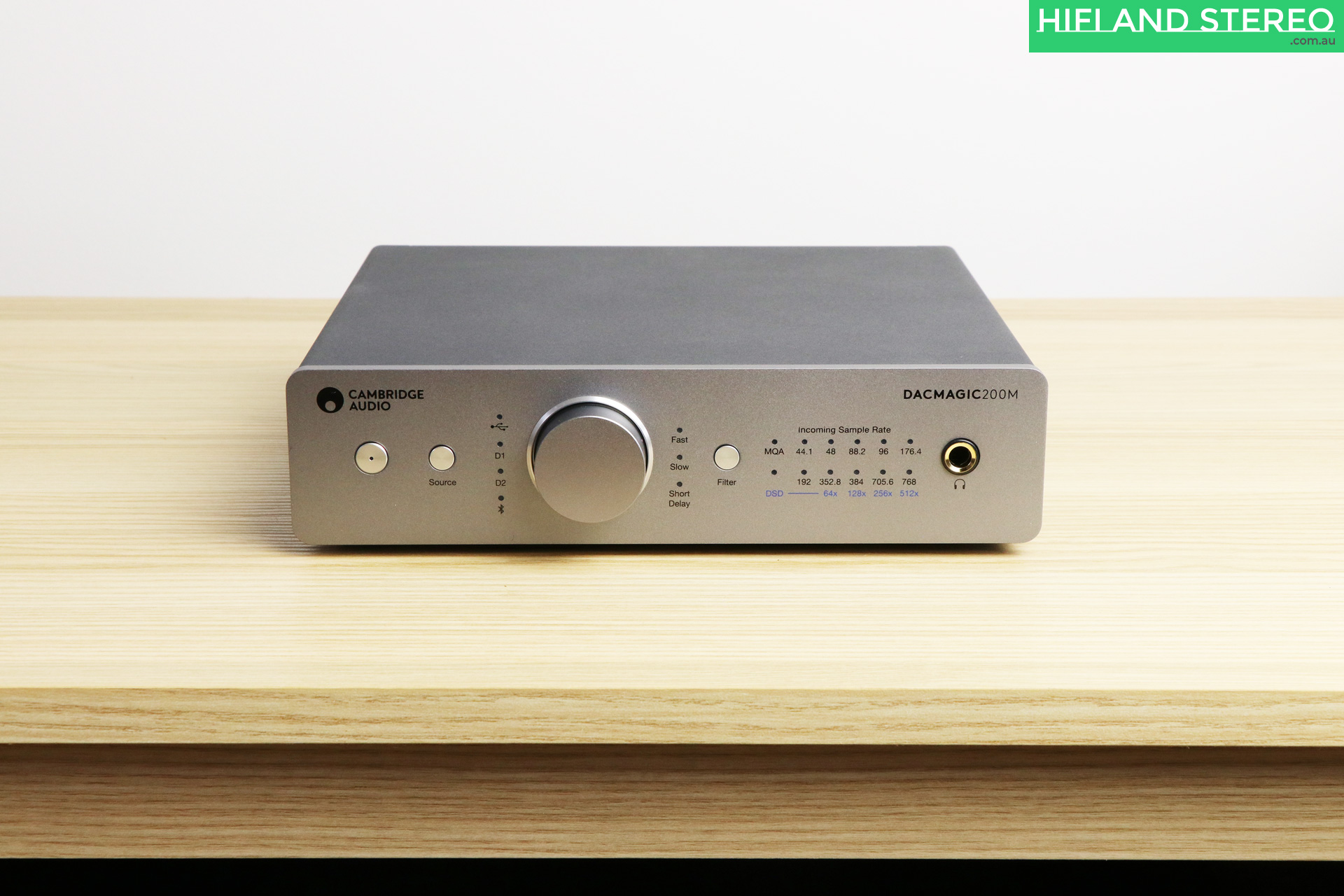
The new Cambridge DacMagic 200M really is an excellent product. Everything just works. Its a neat little well-crafted box and it sounds enjoyable. If it’s feature set is what you need I cannot imagine you would be anything less than enthralled by your purchase of one. If you are dabbling in the olde-worlde arena of Pioneer receivers (and the like) then this is probably all the ‘digital’ you need. Highly Recommended!


- For – It sounds great.
- For – Simple to use and everything seemed to work (easily).
- For – Seems quite well built.
- For – Rather good vale for money.
- Against – Instruction manual ignore many of the features alluded to on the carton.
- Against – Nothing else at this price!
- Price – $899
- Dimensions – 215mm Wide x 52mm High x 191mm Deep
- Imported by – Synergy Audio, Melbourne, Australia
- Tested with Cambridge Audio CXN V2, Naim Star, Falcon LS3/5A
And the beer of the week !
Helios West Coast Pale Ale
So not an IPA, but also not an APA, but a West Coast Pale Ale. Pretty big, slightly off grape fruit smashes you in the face initially. After your palate recovers there is a decent amount of hop that mostly balances an underlying sweet tang and malty goodness.
I haven’t mentioned nose becuase I didn’t notice one.
This isn’t a patch on the 3 Ravens – 55 I reviewed previously, this is much more a bold, mans beer kind of thing, that in no way offers the complexity and balance of that 3 Ravens limited release. Having said that I enjoyed drinking the Helios. Partly I think because it is an enjoyable hugely flavoured drop, but also in the back of my mind, is their other PA/IPA drops which are excellent. Am I missing the point of what they were trying to create here? I don’t know but if you like big bold notes of fruit, hop and malt goodness this Helios is good place to look.
I checked the packaging date which is kindly stamped on the underneath of the can. For this style it is a little old at 3 months of age. Maybe this accounts for the lack of ‘nose’. Perhaps also accounting for the beer going out of whack a bit (maybe) and the slight staleness of the grapefruit flavours.
Overall a solid 8 out of 10 even in its slightly unbalanced, more mature stage of life. I had a few of these. This review maybe a little wonky….