Category: Loudspeakers

Loudspeaker reviews on HiFi and Stereo Australia

  • Rega Kyte – Nothing like everything else.

    Rega Kyte – Nothing like everything else.

    Not your average speaker – in any way.

    Just as you thought there was nothing really new under the sun (that shines on the HiFi loudspeaker world), Rega launches the Kyte. Does the world need another quality but affordable bookshelf sized loudspeaker I wonder? The answer from Roy Gandy at Rega is an enthusiastic, yes! His early exploits in audio manufacturing were in loudspeaker manufacturing and sales not turntables as you might expect. Rega has nearly always offered a range of loudspeakers, although this new model is unlike anything that has gone before. For that matter, they are unlike anything and other HiFi loudspeaker manufacturer is offering either. Let me explain.

    A new take on how a great loudspeaker at sensible cost might be –

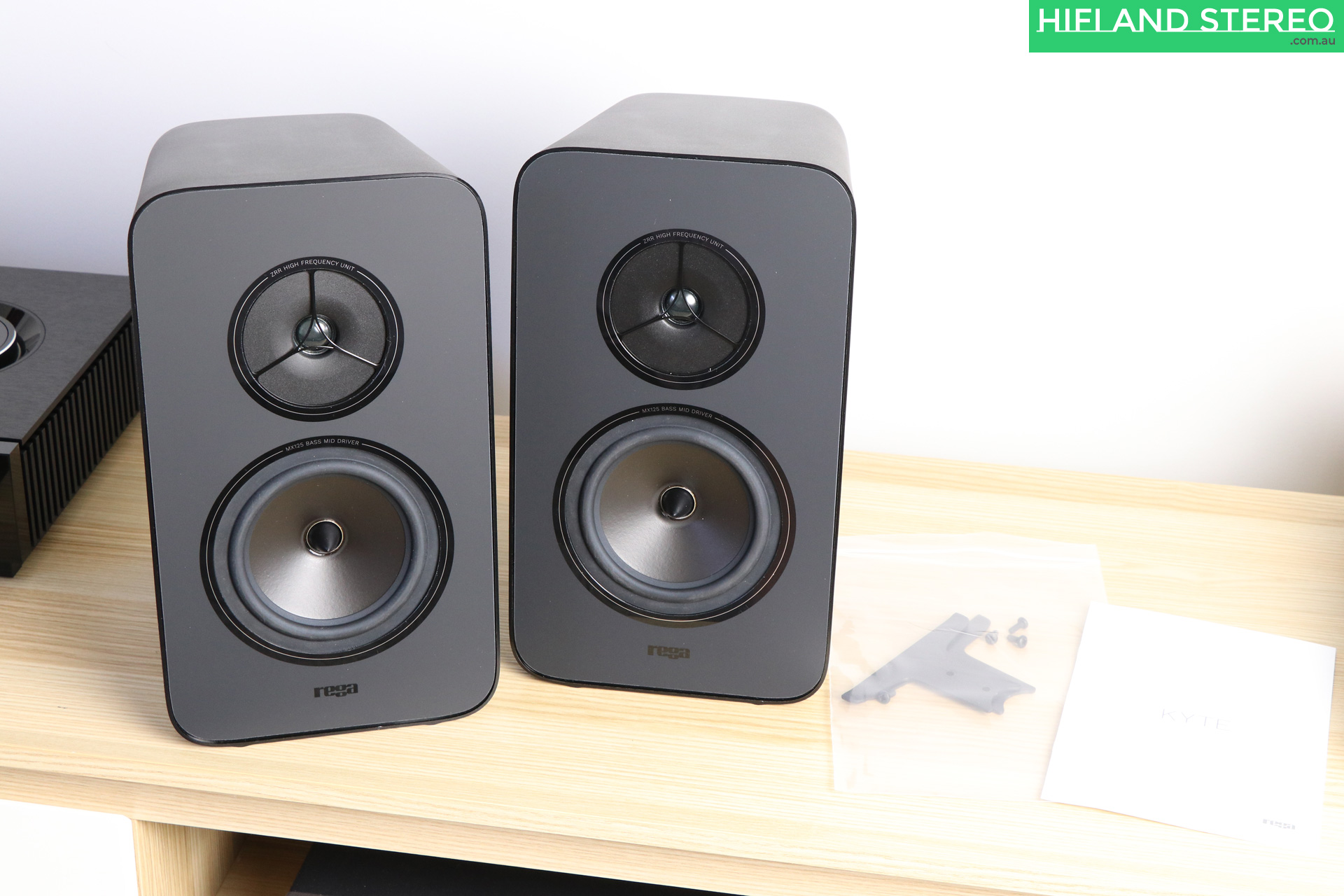
    The ‘unusual’ starts with the plastic enclosure. Rega would probably prefer I call it “Phenolic Resin”, but it’s sort of the same thing and for me ‘PR’ is historically connected to Bakelite. If I suggested this new speaker from Rega was crafted from Bakelite, Mr Gandy could well pay me a visit and steal my keyboard. The fact is lots of parts in the Kyte are made from a plastic of one variety or another with a key exception being the internal “Ceramic Brace”. This arrangement no doubt aids in getting this Phenolic Resin enclosure to sound quite inert. Indeed, the result when rapped with ones knuckles is not dissimilar to a traditional well designed MDF box. This results in a dull sound that decays rapidly. Ceramic plates and a plastic enclosure are not the only shifts towards ‘unusual’ here. The shape of the enclosure itself is somewhat different in that it is a little ‘icecream-container-like’ in shape and one guesses at the factory the enclosures are ‘stacked’ ready for assembly. No grille is supplied to hide the loudspeakers modesty and the input terminals are vertically aligned. The Kytes are made in Rega’s own factory in the UK. Not only are they assembled there but the bass unit is made by them in their Southend-on-Sea facility. These are things we don’t normally expect at a $1099 retail price point. In fact I’m not sure there are any UK built loudspeakers available in Australia for under $2000 a pair. The bass unit looks like a quality piece too. I assume savings made from avoiding real wood veneers and MDF, have been fed back in to areas of design that matter more in regard to sound. Perhaps also avoiding timber has helped with keeping the retail price down. This design ethic all makes sense to me from a performance per dollar point of view.

    Rega Kytes as they come packed.
    Rega Kyte about to be prised from their carton

    But how do they sound, these ‘function over form’ loudspeakers?

    Fresh from their carton I was reminded loudspeakers don’t always sound at their best when brand spanking new. I set them aside and played them for a few hours at a decent level. Enough that the drivers would get a bit of a work out and hopefully provide a more accurate picture of their ultimate performance. Sure enough, my second attempt to listen to them provided a very enjoyable, well balanced and honest sound. To my ear, there was an immediately familiar Rega family sound in the form of a slightly dry top end and a taut but quite full bottom. Much listening on and off over the following days allowed me to realise just how honest a sound these little speakers offer. A real lack of ‘HiFi’ (you know all shiny top end and faux detail) and much more “music”.


    Initially I missed the apparent extra detail available from other loudspeakers I had on hand. An hour later the almost complete lack of listener fatigue from the Regas convinced me of their ‘rightness’.


    Professional HiFi repairs performed by a qualified technician available now in Brisbane


    They don’t start bugging you with any unnecessary ‘tizz’ when using them as background music speakers. Maybe when listening to them with more care, sitting right in front of them there is just a smidge less excitement in the mid and top than my preference. But the bass! Its not so much that there is more than any other loudspeaker of a similar size, but what is there is extended and super tuneful. It lacks any woodiness or other aspect of performance in that region that might be caused by enclosure resonance. Rega have definitely struck gold with the performance of their unusual enclosure design. So balanced is the overall sound quality I struggle to point to or mention any particular example of either their excellence or lack there of. Perhaps to sum up I will employ the much over used term – musical. But they are! The timing in the bottom, the reality in the mid, and the lack of bling added to the sound makes for a very enjoyable fatigue-free listen. They are very competitive at this price level. They will embarrass much more expensive loudspeaker with some of their skills.

    Rega Kyte clean simple lines created with precision.
    Rega Kyte from the front.

    What they won’t embarrass others with unfortunately is style/ finish…

    Sure they give a lot of performance at the price but is this at the cost of a classy finish? They are somewhat industrial looking and for me just a smidge plasticky. Not in a cheap and nasty, poorly built kind of way. It’s more that they just aren’t speakers in the tradition of being made from MDF and cloaked in some thin veneer of real wood. The lack of a grille, the almost sharp edge of the front baffle extremity and the irregular shape messes with my head a bit. There is also the fact that there has to be a little, slightly flimsy, rear ‘leg’ to allow them to sit vertically. These points may slow interest from those who place as much import on the furniture aspects of HiFi equipment as the performance.

    Rega Kyte from the side. The draft is obvious from this angle.
    Rega Kyte from the side. The draft is obvious from this angle.

    But after a week –

    However after a week I was swinging quite hard for the really enjoyable easy to listen to sounds of the Kytes. I was now far less hung up on their less than typical appearance. I still was not in love with the look but I was starting to fall heavily for the sound. My opinion of the appearance is sort of irrelevant, its just my taste. Go to your nearest Rega dealer and take a look for yourself. While there, enjoy a listen to them. If your current loudspeakers are a bit obvious in the upper registers and a bit hard to listen to after an hour or so now is the time to audition the new Kytes. Highly recommended!

    • For – An obvious ‘function over form’ design which does indeed deliver more performance and less ‘style’.
    • For – Clean, balanced sounding loudspeaker with very good bass performance.
    • For – Non fatiguing to listen to long term.
    • For – Rega ‘Made in England’ build quality and the longevity likely to come with that.
    • For – Maximum points to Rega for trying something new in the speaker design world.
    • Against – Appearance may not be to everyone’s taste or to their priorities when buying equipment.
    • Against – Some bass reflex port noise/chuffing subtly apparent with some bass heavy music.
    • Against – Not having a flat bottom surface may make siting on some stands difficult.
    • Price – $1099
    • Dimensions – 325mm High x 188mm Wide x 232mm Deep (with rear foot fitted)
    • Warranty – Lifetime
    • Imported by – Synergy Audio, Melbourne, Australia
    • Tested with Naim Star

    And to make the Kytes even sweeter…

    Coopers Sparkling Ale. In the craziness that is the current enormous interest in locally made beer I feel poor old Coopers is possibly being forgotten. Revisiting the ‘Sparkling’ for this tasting reminds me of all the reasons why it shouldn’t be. Firstly these guys really do know how to make beer. They have been at it for 159 years making them about 100 times more experienced than your average hipster start up craft brewer. This experience shines through too in the absolute consistency of their recipes. When I knocked the top of this stubby and took a taste my first thought was wow, this is exactly as I remember it. Their yeast is the driving force behind the flavour and they work hard to look after it. Then there is the simple refreshing nature of the drop, backed up with bit of alcohol driven warmth. Its clean tasting and oh so easy to just knock back the lot in seconds. I resist though and think hard on what that ‘Coopers’ taste really is. I really still can’t pin it down after 20 odd years of enjoying this and the ‘Pale’. Is it a bit of caramel malt coupled with the estery flavours their yeast throws off, or is there more to it? I highly recommend you try it for yourself (for the few that haven’t that is). If you have tried it years ago and weren’t sure and have been drinking crafties lately then have another crack at the ‘sparkling’. The flavour is certainly going to be confronting to those used to drinking beer substitute such as Pure Blonde and the like, but might be just what you want as a change if you have mostly been drinking super heavy IPAs lately.

    Some other things I also noticed about this Coopers drop is firstly the head lasts and lasts. It’s still there till the last drop and fully laces the glass. I tend to enjoy Coopers more without tipping in or mixing up the yeast sediment. I realise that the cool kids behind the bar want to ‘roll’ them before serving but I reckon that’s a myth started by the marketing department years ago in an attempt to turn bottle conditioning and the accompanying sediment into a positive. In reality not consuming settled out yeast is surely the go? You get a full 375ml of beer from Coopers so if you loose 20ml by holding back the sediment is it any great loss?

    Anyway pour a beer now and enjoy some music, no matter your stereo.

    Coopers Sparkling Ale poured out
    Coopers Sparkling Ale poured out
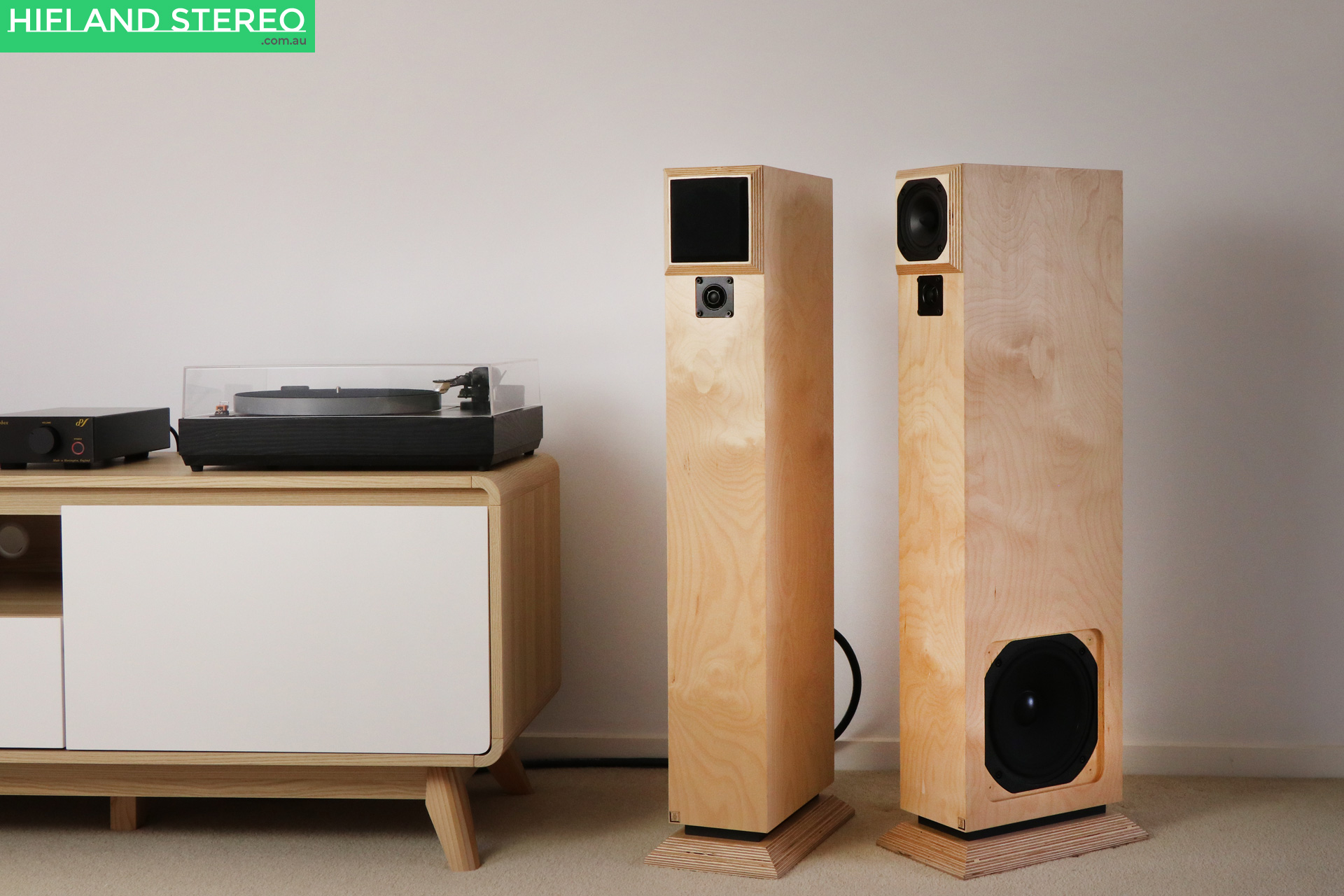
  • A new Australian built loudspeaker, with French flair! Microphase Towers reviewed.

    A new Australian built loudspeaker, with French flair! Microphase Towers reviewed.

    History – Who is Jean-Marie?

    Jean-Marie Liere, the creator of these somewhat offbeat towers started life in France. I say ‘towers’ but this size of speaker was once known as a floorstander (when a loudspeaker was too large to happily be placed on a shelf). During his time in France prior to exporting himself to Sydney, Jean-Marie worked for Hewlett-Packard. This was at a time when test instruments for loudspeaker measurement cost approximately the same as a small provincial cottage. How times have changed…Test equipment has now never been cheaper and houses are a similar price to tulip bulbs in Holland during the early 1600s! This free access to what was state-of-the-art test gear lead Jean-Marie off on a search for loudspeaker nirvana. The result was his first speaker design, a small monitor style speaker which he sold in commercial quantities. Some time later when his venture did not meet with his financial hopes and a family arrived, he returned to the reality of regular paid work. Sometime later in a land far away (post 1997 when Jean-Marie moved to Australia) a lifelong interest was rekindled. Jean-Marie’s interest in phase correct, fast sounding loudspeakers that offer life-like performance resumed with the current range of Microphase Audio Design loudspeakers. Back in business for the last 5 years, Jean-Marie has enjoyed fine tuning his 2 satellite models, a sub, a centre and the model on review here, the Tower One.

    Construction and Design

    The Microphase Tower Ones are built right here in Australia to exacting standards. The cabinet construction material is Birch plywood imported from Finland. The unusual, somewhat architectural look may not be to everyone’s taste but I rather like the style. Simple, functional and manufactured by a local cabinet guru who once made enclosures for Richter and Orpheus back in the day. I’m not sure when these two highly regarded manufacturers stopped making their loudspeakers here on home soil, but I don’t believe they do anymore. Moving on to the ‘innards’ of the design, we find more ‘French flair’ (more than being created by a Frenchman). French made Audax drive units abound. Coincidentally Richter and Orpheus also used Audax drive units in many of their designs. They are great sounding drivers in my opinion. Not only my opinion but in the opinion of designers at Spendor, the BBC and Mission over the years. Speaking of the BBC it should be remembered that many BBC designs such as the LS3/5A employed Birch ply as the cabinet construction board too. All in all Jean-Marie would appear to have made some well regarded choices in materials for his designs.

    microphase tower one reviewed by HiFi and Stereo Australia
    Microphase Tower One reviewed by HiFi and Stereo Australia

    More on design…

    Whether you like the look or not, one cannot doubt the build quality of these loudspeakers and the likelihood they will last a very long time. Beautifully fitted together with all components flushed into the front, rear and side baffles. Neat magnetically attached grilles are employed for the side mounted woofer and front mounted mid. The tweeter is kept reasonably safe from interested fingers by a tough plastic ‘acoustic lens’. Bi-wiring is available at the rear by familiar looking 5 way binding posts. Sometimes I wonder what the fourth and fifth ‘way’ are? I’ve got 1) Spade connectors, 2) Banana connectors, 3) Bare wire, 4) Not sure, 5) Don’t know. Anyway, if you wish to drive the woofer with a separate amp you can. Or you could just run separate wires to it from the common point of the speaker terminals on the rear of the amp. Your mileage may vary but for me bi-wiring in this way is right up there with propping your speaker cables up on supports. Bi-amping on the other hand may well help improve the sound, although at some considerable cost. To sum up, these Towers are smart and modern looking. Perhaps one well out on the periphery of what many would consider typical loudspeaker design.

    And the sound!

    Now the fun bit. I didn’t run them in as Jean-Marie supplied me a pair that had done a bit of work and were fully loosened up and ready to rock. I applied signal via my Naim Star and some files from Tidal. I am very familiar with the sound in my room having used this source on a number of other loudspeakers. I thought therefore, this was a good place to start and hear what the general flavour of the Microphase speakers was. I kicked off with some tracks from kd Lang’s ‘All You Can Eat’ (as mentioned in my article on well recorded music). Immediately it was obvious from the ‘smack’ from the drums that these speakers are fast and are quite sensitive, or at least as sensitive as the spec suggests. A decent amount of detail was obvious and the bass was quite uncoloured. The bass on this recording can be overly full on some speakers but not here on the Tower Ones. The upper treble was in balance with the rest of the spectrum doing just what it needs to do and nothing more. These are not sizzly sounding loudspeakers with exaggerated treble.

    Wishing to explore the bass extension I flicked to Nusratt Fatah’s, ‘Sea of Vapours’ on the Musst Musst album (also mentioned in my 10 best demo tracks article). This track dives deep with electronic bass going way down. I also noticed on this track a great sense of ‘air’ but as mentioned previously, without any excessive sizzle from the tweeter. Bass-wise I expected it may go lower than it did due to the largish bass unit and the sealed alignment (rather than the far more common bass reflex alignment most designers employ). Sealed alignments roll off more slowly and tend to offer a more accurate bass response than the sometimes boomy ported alternative. When I took a closer look at the probable box volume though I realised this isn’t really a very large loudspeaker enclosure. I made a quick comparison with another loudspeaker I had on hand that also sported a sealed bass unit design and although a different shape, it offered a similar internal volume. The Microphase towers comfortably outperformed these speakers, not so much in extension but in sensitivity.

    Moving onto the delicate midrange area, I played Meav, once again from my demo suggestion article. Her voice has a glass like quality and the ability to upset many a loudspeaker. To some degree the Tower Ones suffered at Meavs voice as well. Just a trace of a hard edge, or maybe some otherwise well hidden resonance was excited by her demanding vocal. I’m not sure, but suffering at the hand of Meav does not place these speakers into some ‘Robinson Crusoe’ like group. I have heard many a well regarded speaker show off some nasties when she is played. Hence a great test I think. Playing a variety of other material I did notice the occasional ‘cupped hand’ like colouration in the mid which for many will go unnoticed but for some may be an issue. Overall the sound of these speakers is rather refined with quite an even frequency response and an enjoyably painted stereo image.

    Sum up –

    Microphase side mounted woofer picture
    The Microphase Tower One with grille removed from side mounted woofer

    Sum up –

    For anyone looking for something a bit different. For those wanting a loudspeaker of bespoke appearance and build quality, the Microphase Tower Ones are worthy of audition and closer inspection. I enjoyed their time in my listening area for their iconoclastic style.

    • For – Unusual and quite unique cabinetry.
    • For – Built in Australia to last!
    • For – High quality components used throughout.
    • Against – As much as I like the appearance some who saw them while under review were unsure.
    • Against – Some slight edginess/resonances around the upper midrange area could be distracting on some material.
    • Against – Just an observation but there is no facility for spikes to be fitted in the underside of the plinth.
    • Manufactured by – Microphase Audio Design, Sydney, Australia.
    • Dimensions – 195mm Wide x 340mm Deep (plinth) x 955mm High
    • Weight – Approx 10kgs each
    • Price – $4290pr inc shipping to anywhere in Australia
    • Tested with – Naim StarStraightwire Symphony 3 speaker cables.

    Beer!

    3 Ravens American Pale Ale. The beer style that pretty much started US based craft brewing. It is owed a lot. I set out to buy something brewed in France for this beer tasting for no particular reason other than Jean-Marie comes from there originally and reckons French beer is fantastique! Alas with the local craft beer scene going mental, and the main stores actually stocking decent beer, European alternatives are very thin on the ground. I visited three stores with no success. I could have gotten close with a few Belgians of some distinction but I’m pretty sure Jean-Marie would agree, Belgium ain’t France. It would appear I am now stuck drinking craft beer if I fancy something fresh and tasty.

    So being forced to drink crafties, I thought I’d grab something of quality. A relatively local one in this case, made in Thornbury, Melbourne. I chose this particular one due to the outrageous statements on the side of the can. Very clearly printed in alternating blue and red Arial. Well, some Sans Serif font that is rather basic in appearance. I can report that what is contained within the can is anything but basic. As you may have noticed from the pics, not a lot of head, and frankly not benchmark setting mouthfeel but that’s the only negatives I can express. This is one damn fine and complex APA. Very much a hyped-up version of Sierra Nevada Pale Ale which is probably still the reference beer for the style. Terrific balance of malt and hops, probably more hops than malt but not enough out of whack to annoy. I mean, you want more hops right? Well this beer delivers. As much in bitterness as late additions, mmm yummy! I can’t see an alcohol content number on the can but it states 1.6 standard drinks so I guess about 5%. (Edit – found it in large print – 5.5%) No nasty aftertaste, and as mentioned, very satisfying levels of complexity. It keeps you guessing as to what you are in fact actually tasting. This is old school APA goodness, nice and fresh and ready to be smashed down 3 at a time. A solid 9 out of 10 from me. Only let down by lack of body/head. Buy some now before they decide to stop making it again.

    3 ravens american pale ale can and poured glass
    3 Ravens American Pale Ale can and beer poured into a glass
  • Alderwood Eros – A new Australian Made Loudspeaker

    Alderwood Eros – A new Australian Made Loudspeaker

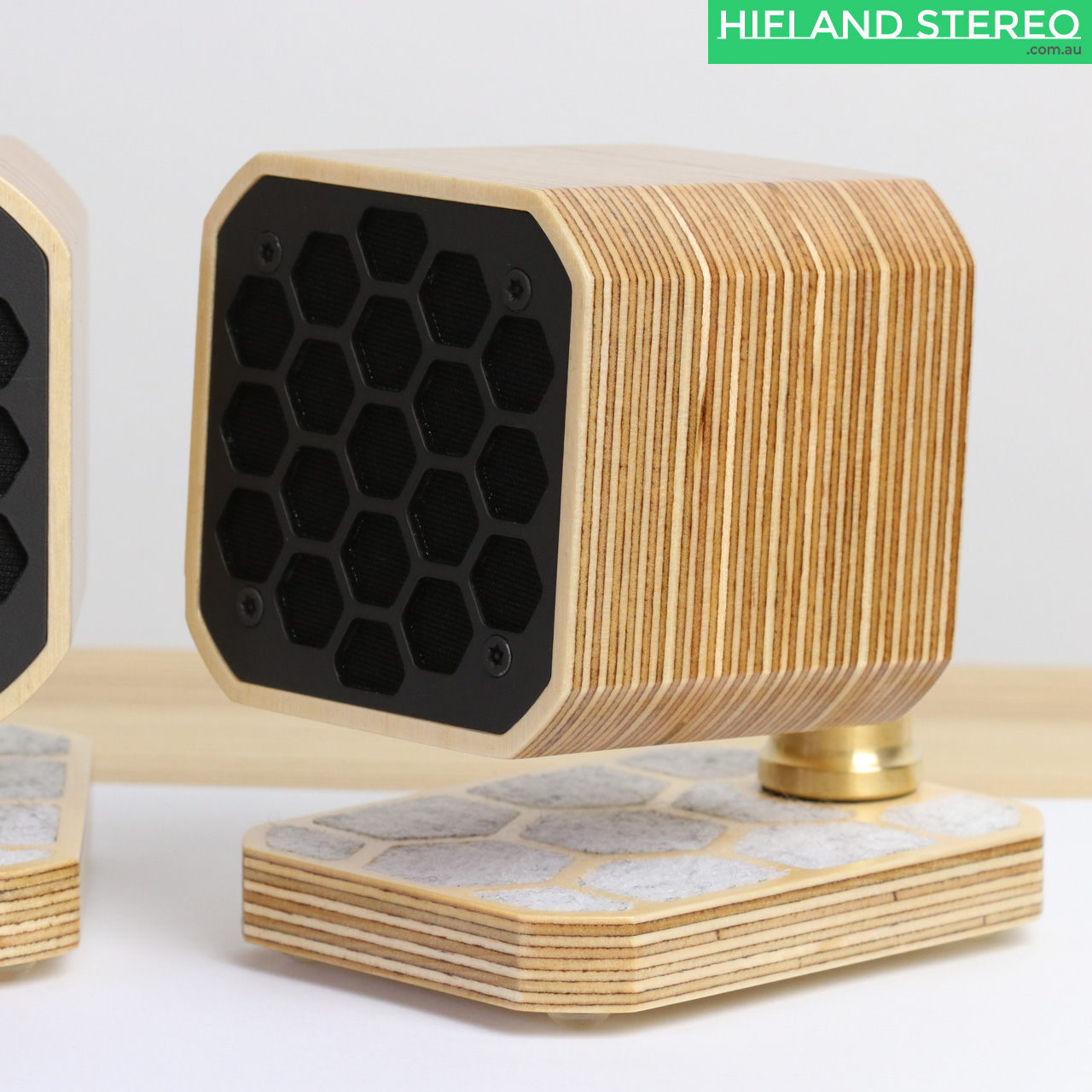
    We used to make all sorts of things in Australia as diverse as electronics, clothes, watches and cars! There were a host of Australian made loudspeakers too, including some names still around such as Richter, Duntech and Krix. Unfortunately many have gone…forever. Of those that remain, I suspect that many components of these brands are sourced from overseas. In many cases they may even be assembled overseas. It might be a stretch to regard them as still ‘Australian made’? For many buyers though, it doesn’t matter where it’s made and for the manufacturer the choice may well be to go offshore, or go out of business. I fully understand this but Scott Wilkinson at Alderwood Speakers is ignoring this trend. He loves the concept of making things here in Australia. He has designed a particularly cute speaker AND makes the vast majority of the component parts on the premises at Alderwood HQ in Victoria.

    Alderwood Eros Pro in clear lacquer finish
    Alderwood Eros Pro in clear lacquer finish

    Digging further into how the Alderwood Eros Pro was designed and made Scott tells me, that the drive unit (there is only one per box) is of his design. Particular care was taken with the cone and roll surround materials to get just the tonal balance he was looking for, plus durability and moisture resistance. The driver is assembled at Alderwood HQ and magnetised on the premises. The enclosures are also crafted in-house on various CNC woodworking machines. Hand finishing, assembly, careful testing and packaging for shipping all happens at Alderwood’s Cobden facility. A stunning part of country, very near the 12 Apostles on the Victorian coastline.

    And they arrive very nicely packed indeed!

    It is great to see an Australian built product arrive so ‘complete’. There was proper packaging, labeling and an instruction manual. Within minutes I had the Eros attached to their brackets and stands, cables plugged into the ever-ready Naim Star and music playing. Mmmm but there was a catch…

    Alderwood Eros packaging being unboxed
    Alderwood Eros being unboxed

    The Alderwoods are obviously very well made. Well made enough that they sport an IP67 rating which in ‘English’ means you can use them on a boat. This boat could be off the 12 Apostles taking a lot of green water over the bow and they will keep on playing. I’m not sure I would want the green water smashing into the speakers directly but the point remains that they are marine rated. In fact the IP67 standard suggests they could play under water for up to half an hour! They are offered in a range of finishes including the clear coated finish on display here but also a textured black or white painted finish. In fact if you are willing to wait Scott can organise a pair in any colour you like. I’m guessing this ‘customisation’ might come at a small premium, but the clear, white, black option all retail for $1900pr. For me the clear is definitely the go, they look stunning. Included in the box are a pair of rather handsome machined brass swivel brackets. These are included in the price and yet look very ‘bespoke’ (and pricey). Scott also supplied some appropriate cables and his new speaker stands. Both are $99 optional extras (a bargain!).

    And the catch is…

    When I say these loudspeakers are tiny I’m stretching the truth as they are in fact, miniscule. Take a look at the picture below for a scale shot to give you an idea just how small they are. To the uninitiated it might seem they could not possibly produce serious volume or great sound quality. The catch of course is that they do not even attempt to produce any low bass notes. In fact the lowest bass is gently filtered out by a built in simple passive crossover. This leaves the vast majority of the audible spectrum intact but the need for high excursion cones and big boxes is removed. Those lower notes that require real power and authority are handled by a subwoofer of your choice. Alderwood manufactures a few, but I was interested in what an inexpensive solution might sound like. With this goal in mind I sourced an REL T Zero on short term loan from my friendly neighbourhood HiFi store – The Audio Tailor. (Also currently Australian HiFi Retailer of year!) The REL is a highly regarded incredibly small powered woofer that is both fast and musical but also rather well priced at only $699. It was a guess on my part that this little sub would work well with the Alderwoods, as it turned out I guessed correctly. I wired them directly to the HiFi and Stereo resident Naim Star, using cables Scott at Alderwood supplied with the correct connectors fitted at each end. I connected the REL subwoofer directly via an RCA lead to the pre outs of the Naim. I tweaked the low pass filter on the rear of the REL to its highest setting, adjusted the level control to the middle and powered everything up. Now I had full range sound.

    The Alderwood Eros Pros with some everyday objects in the background for scale
    Yes the Alderwood Eros Pro are tiny

    And the sound?

    The Alderwoods have an immediately appealing light and bright balance which causes instruments such as acoustic guitar to sound exciting and dynamic. The obvious pace and detail of the Alderwood’s sound also adds fruity colour to husky male vocals such as Joe Bonamassa and Robert Cray on track 4 of Lee Ritenour’s Six String Theory. The overall effect is a little like feeding acoustic instruments through a Concert PA, they become larger and louder. Through a PA they also become somewhat less clean and a bit harmonically challenged. In other words, their frequency range is perhaps ‘enhanced’ or some would say ‘coloured’. For many this is no bad thing and frankly for their (the Alderwood’s) incredibly small proportions and price, a damned fine outcome.

    I do note that the instrument most effected by their exuberant performance is the female voice. For those looking for a particularly sweet and seemingly accurate rendition of your favourite lady singer, you might need to buy larger and probably more expensive loudspeakers. I still very much enjoyed the likes of Janis Ian’s ‘Breaking Silence’ Album (an album I should have put in our 10 hot demo tracks article?). Her easy to get along with voice does not shine a light on any limitations the Alderwood’s incredibly tiny full range driver may cause.

    I should mention that the integration I easily achieved with the REL T Zero powered subwoofer was perfectly seemless. The full range of sounds appear to come only from the tiny enclosures. I experienced none of the old ‘Bose-like’ boom-boom from one corner, a hole in the response and then tish-tish from the main speakers. I should also say that the quality of stereo imaging was impressive with great accuracy of placement and significant width and depth.

    So, overall an enjoyable sound if not the last word in audiophile perfection. But then, seriously, at this price and size that was unlikely. The laws of physics are almost certainly impossible to break, but Alderwood have come very close with the Eros model. Their slightly brightly lit and mildy coloured response is likely to be just what many want to hear. If you were to consider them a loudspeaker more in the ‘lifestyle’ category rather than an outright attempt on HiFi world domination, then I reckon they are a great success.

    Alderwood Eros Pro pair pictured on REL T zero for scale.
    Miniscule Alderwood Eros Pro in clear lacquer finish pictured for scale with Falcon LS3/5A and REL T zero.

    And to Sum Up !

    I thoroughly enjoyed my time with these hand crafted gems. In a situation where you really do not want to see the source of the beautiful music in the room, these Alderwoods can be highly recommended. They can also be highly recommended for those that want their cash to stay in Australia. You can support a small local business trying very hard to manufacture something here. Australia is a very harsh environment for those designers who would also like to make the product locally. Good luck to Scott Wilkinson, I wish him well on his quest to bring back real ‘made in Australia’ manufacturing and from what I see and hear with the Eros model, he is likely to succeed.

    • For – A very high quality product designed and made in Australia.
    • For – Rather stunning aesthetics.
    • For – Impressive sound quality and scale for their size.
    • For – Impervious to dust and moisture.
    • Against – You will also need a subwoofer to obtain full range sound.
    • Against – Slightly exuberant nature of the tonal balance may not suit some listeners or all material.
    • Manufactured by – Alderwood, 56 Curdie Street Cobden, Victoria Australia – www.alderwoodspeakers.com.au
    • Price – $1900pr inc brackets (stands and cables extra at $50 each)
    • Tested with Naim Star and REL T Zero (on loan from The Audio Tailor)

    Beer! The stereo is on, favourite album queued….

    Today I’m going down the West Coast IPA path again. They may not be everyone’s favourite style, but I like them. A good one has lotsa mouthfeel and a great whiff of fresh hops when you pour it. The hop bitterness, of which there should be plenty, is balanced generally by big biscuity malt. It may well be that this local one from Sea Legs brewery is as close as most crafties get to making it right. I have had better but this was very enjoyable. Superbly balanced with reasonable complexity. A thoroughly enjoyable drink that annoyingly you could just throw down. The highish alcohol for the style is very well disguised. This makes for a sessional, right up to the point where you fall down and your wallet is empty. Which brings me to another point – price? I have bought 3 of these, at three different locations. One at the brewery itself and the other two in cans at local bottlo’s. $8.50, $10 and $12.50, all for the same quantity. One of the prices they throw in a stool and a glass… So what is the real price of beer? For that matter how can there be one price 50% more than another. The answer is, I have no clue, but wow things have changed. There was a time when a beer in a bar or restaurant was $7 – $11. This time wasn’t long ago and it still exists now.

    I reckon the $10 I paid at the brewery was reasonable value. As mentioned you get a free chair and container to drink it out of and its super fresh straight out of the keg. So the real question is what has happened with bottle shop pricing? Take home beer used to cost a third or maybe even a quarter of the restaurant price. Well we know that bottle shop B is taking about 47% more than bottle shop A in turnover. Assuming A is making money and the two shops have similar overheads (which they do, based on size and staffing), B is making some serious bucks. For how long I’m not sure, as unsurprisingly I don’t shop there anymore. The guy at A is a much friendlier bloke too. There is possibly an analogy here with the HiFi world.

    B is owned by a large business with half a dozen pubs and no doubt many bottle shops. As part of this ‘corporate’ structure we as customers get the same product, coupled with poorer service and pay a premium for it. The winner is some faceless corporation which probably runs it’s business less efficiently. They no doubt also own a much bigger boat than old mate the independent. All this makes me wonder about the mass corporatisation of the brand name HiFi landscape that has been going on for the last few years. Are we as consumers getting more or less for our money as our favourite brands get gobbled up. Mostly by groups of accountants who couldn’t give a toss about fidelity and good music?…..

    If you get a chance give one of these WC IPA a go. Sea Legs make excellent beer under the Story Bridge in Brisbane. Drink up!

    sea legs west coast ipa can
    One of the better Australian made West Coast IPAs I have enjoyed recently. Very yummy!
  • Falcon LS3/5A Gold Badge. Is it Gold?

    Falcon LS3/5A Gold Badge. Is it Gold?

    “Argh, the old LS3/5A?” I hear you say. “The most over-rated, most re-created, old clunker of a speaker ever!” I understand if you are a little tired of the multiple versions, revisions, re-creations and in turn all the articles proclaiming their brilliance. Well, here we go again, but with a twist (some facts, less nostalgia).

    For those not around at the time of these speakers being a current model (70’s and early 80’s), speakers of the day mostly sounded incredibly coloured and probably a bit ‘harsh’. Back then I could not find a loudspeaker that actually reproduced human voice in a way that sounded anywhere near as sweet and accurate as a live singer does. Well, not until (you guessed it) I was exposed to the LS3/5A. I loved the midrange of those Chartwells and Rogers. At the time they were so far ahead of the alternatives they really were, a game changer.

    I didn’t buy a pair back then for a couple of reasons. (1) Because they didn’t play loudly enough or deeply enough for my (then) teenage tastes in recorded music reproduction and (2) They cost ten times my (then) weekly income! Recently, Falcon Acoustics have given us all a second chance to buy a brand new pair. Their considerable effort to recreate the LS3/5A exactly as it was made in the 70’s and make them available brand new, has allowed us to judge the LS3/5A in the harsh light of 2020.

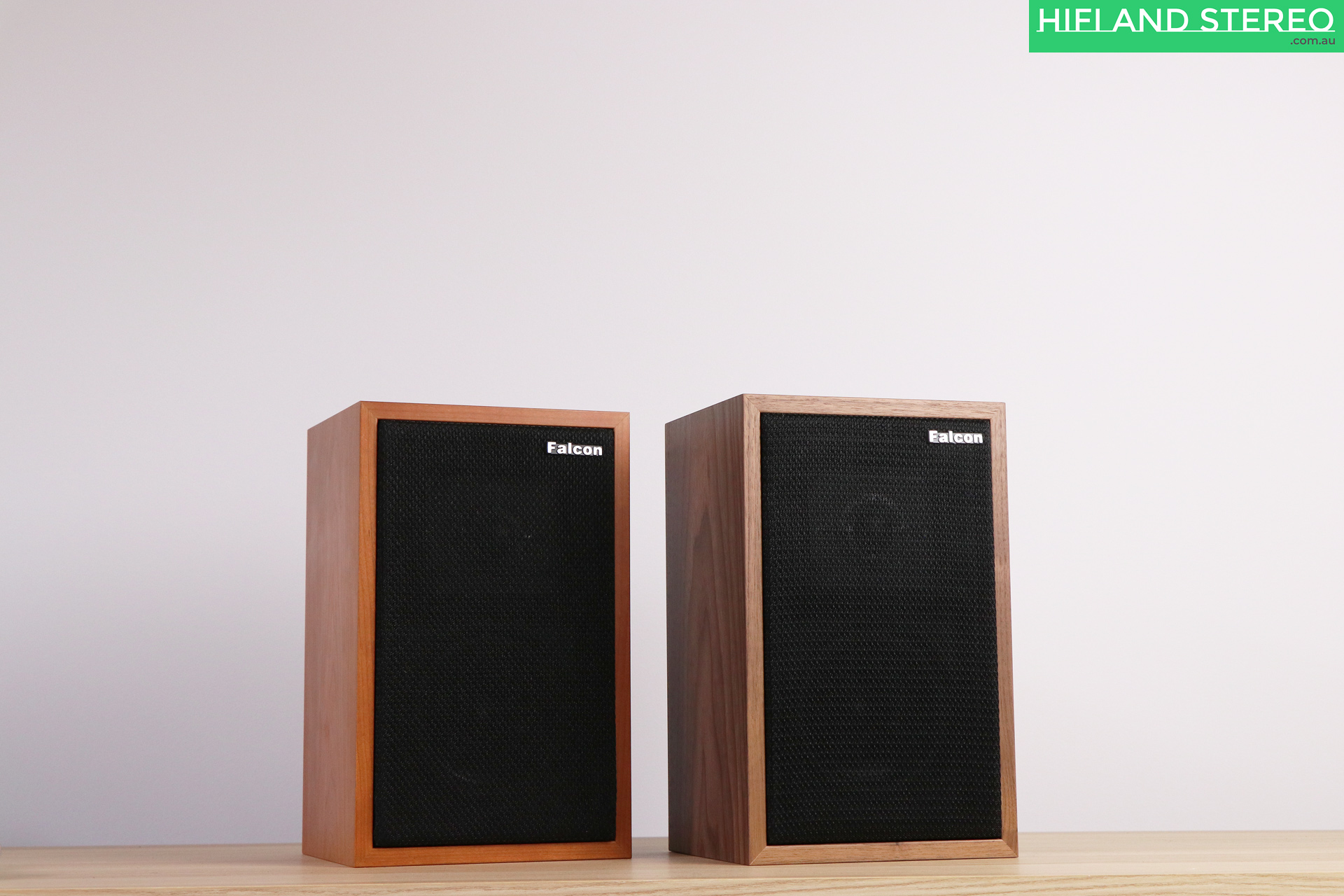
    Falcon Acoustics Original and Gold Badge LS3/5A side by side
    Falcon Acoustics Original and Gold Badge LS3/5A. They look the same from here!

    In my role as a technician a few pairs of different versions of LS3/5A have passed over my repair bench in the last few decades. I always enjoyed the final testing part of the job, where I got to re-visit my youth with their particular tonal viewpoint. I now forgive them their lack of huge bass and inability to fill a large room. Due to their age (20 – 30 years) I also forgive a slight lethargy in their output. Dynamics were muted, the sharp edges rubbed off and generally excitement levels were a bit subdued, I thought.


    “When I first turned a new pair of Falcons on, fresh from the carton and not run in, I was immediately taken back to my early years of HiFi discovery. The flashback was completely bizarre.”


    When the day came to hear a brand new pair of what surely is the closest re-creation of this tiny BBC designed monitor, I was concerned. Had my old brain been playing tricks with my memory of these wonderful little performers? Was I to be terribly disappointed? Sure, the old ones I had made repairs on had enormous charm, but my memory suggested they did lack some detail and dynamics compared to new (as mentioned above). It turns out my memory was smack on. When I first turned a new pair of Falcons on, fresh from the carton and not run in, I was immediately taken back to my early years of HiFi discovery. The flashback was completely bizarre. Like an old familiar smell or snippet of a song from the past can transport you, I was transported. This ability is perhaps part of my soft spot for them. I also appreciate the engineering purity of the design and the fact that they were a new bench mark in midrange reproduction accuracy. The LS3/5A also offer a different presentation to more modern loudspeakers. The bottom line is, I’m glad Falcon made the effort. Having now bought a pair some 40 years later I have been enjoying them on a regular basis and loving their particular presentation. They offer an emotional connection to the musical performance in spades.

    Both original and Gold Badge Falcon LS35A with their grilles off.
    No differences to be found here…

    Now, to the improvements Falcon feel they have made with the revised version, the ‘Gold Badge’.


    Professional HiFi repairs performed by a qualified technician available now in Brisbane


    Falcon suggests 99% of the improvements are in the crossover execution. My initial thoughts were that they sound rather similar if not a tad more brightly lit above 2 – 3khz. I put this down to running in being required and set about playing them as much as I could over the next 10 days. In that time, they clock perhaps 40 hours but not always at particularly high playback levels. During this time, I listen to them intermittently and keep coming up with the same thought. The Gold Badges are a bit brighter and maybe lack the very, very slight nasal character of my originals. This very subtle flaw rarely shows itself but is the thing that I occasionally find distracting with the Falcon original spec. I was bemused that it wasn’t apparent on these new loudspeakers. I was very interested to see whether there is more at play than a tweak of component type in the crossover.


    “The time had now come for a serious listen. They were not fully run in but then neither were my originals. The GBs now had 50 odd hours and my originals perhaps 100 hours. Not the same, but I had noticed little shift in the balance of the Gold Badges during those 50 first hours…”


    After a cursory look they are exactly the same on the outside (bar the sticker on the rear). A peek under the grille and nope, no changes there either. A handful of screws later, and the Gold Badge spec crossover is revealed. Indeed, it would appear that the crossover is the only change between the two versions… Interesting.

    The time had now come for a serious listen. They were not fully run in but then neither were my originals. The GBs now had 50 odd hours and my originals perhaps 100 hours. Not the same, but I had noticed little shift in the balance of the Gold Badges during those 50 first hours so felt safe in being able to make a fair and useful comparison. I took a quick listen again to a few tracks I had enjoyed very much on the LS3/5A GB version. I loaded up ‘Luka’ by Suzanne Vega’s (from ‘An Evening of New York Songs and Stories’); ‘El Floridita’ from Don Grusin’s ‘The Hang’; and ‘Mercury’ from Mark Gillespie’s album ‘Only Human’. Then I switched to the original version loudspeakers… Sheesh! That was not what I expected. My ear must have gotten used to the balance of the GBs as the originals now sounded very mildly sucked out in their presence region. They were just not as exciting or interesting as the GBs or at least how I remembered them. Concerned that maybe I hadn’t matched the volumes I tried the test again taking careful note of levels. The display on the Star said ’67’, so a decent listening listening level but not enough to have the neighbours rushing to call the cops. Now with the levels definitely the same, I remained considerably more excited by the output of the new version. I then went off and did something else, not entirely sure why two BBC licensed designs should sound so different over at least half of their output spectrum.

    There is a difference here but I’m guessing the colour of the sticker isn’t making much of a difference to the sound…

    I came back to them again some days later having played the Gold Badge versions some more and louder. I still wondered whether the differences between the two were partly run-in related… This time I re-tried the previous music choices but also quite a few others. Running through Donald Fagen’s ‘Nightfly’ along with the (rather demanding) Rickie Lee Jones and a few tracks off ‘Balm in Gilead’. There was no doubting that the new Gold Badge LS3/5A from Falcon had a smoother response from 1Khz and above and generally has a little more output up top overall. At least, that’s the way it sounded to me. The result was an apparent improvement in detail and listening excitement. All I could say was… Wow! This is not the outcome I expected at all. I imagined a subtle difference and one that maybe I wouldn’t even consider a definite ‘improvement’.


    “I made a quite a few measurements of both at the same nearfield position. I’ll admit using a quick and dirty method (an iPhone and an audio measurement app with RTA functionality). Nonetheless, I was comparing one speaker against another, so any kind of state of the art accuracy wasn’t required, just some consistency. With many measurements taken, they all showed the same trend….”


    Later still and I wanted to put the ‘run-in’ question to bed. I kept playing my potential new purchases in the hope of a ‘settling’ of the mid and high response. Nope, still no change some 15-20 hours further on. I thought that I would measure the difference and confirm that I am not hearing things just because I wanted some new toys. I present the attached chart showing a distinctly smoother mid and top with quite a bit more output at various higher frequency bands. These charts would appear to back up my listening tests. I made a quite a few measurements of both at the same nearfield position. I’ll admit using a quick and dirty method (an iPhone and an audio measurement app with RTA functionality). Nonetheless, I was comparing one speaker against another, so any kind of state of the art accuracy wasn’t required, just some consistency. With many measurements taken, they all showed the same trend.

    RTA responses of both Gold Badge and Original Falcon LS3/5A
    Quick and dirty maybe but this RTA output of both designs backs up what I heard.

    So, to wrap up there is a significant improvement, and one I am pretty sure is going to involve the sale of my original Falcon LS3/5A and procurement of a fresh pair with Gold Badge specification… I have to say (as many have) that it is surprising that a BBC licensed design can sound quite different from one version to another. There is a clue here for budding LS3/5A purchasers. You are going to have to try to listen to the version you hanker after before laying down the cash. If this is the difference between two Falcon versions, then I wonder at the breadth of difference between the 4 or 5 other ‘versions’ of this monitoring legend. No wonder those who love the old ones from the 70’s and 80’s have their favourites. If you have the original Falcons but fancy a bit more air, sweetness and detail you are going to need to check these out.

    The new Gold Badge spec crossover for the LS3/5A by Falcon Acoustics.
    Here is where the difference lies. I’ve been saying for years that the crossover is where the magic happens when it comes to loudspeaker design !

    Oh, and one other thing. All this LS3/5A listening did remind me of another part of the whole LS3/5A love affair for some. These speakers don’t force a personality onto the recordings. Well, that’s not quite true in the sense of deep and weighty bass and the ability to have some slam like a real live performance. HOWEVER, what they don’t do (in my opinion) is add unnecessary ‘HiFi’ colour or a sheen of some sort to everything played through them. You do get a feeling of being closer to what the folk in the control room were listening to that day when twiddling the knobs and hitting the record button. These speakers allow one to more easily understand what the music makers were wanting you to hear. Sometimes modern loudspeakers’ own character (a character of perfection?) is sometimes what you are hearing, as much as the music or recording. At least that’s how it strikes me and is, as I say, another reason I think these ‘old clunkers’ have such a fan base. Happy listening!


    Click on any image above and peruse the gallery for High Resolution images.


    • For – Being very nicely crafted in the UK, from solely European sourced premium components.
    • For – An ability to have singers standing in your actual room!
    • For – Some would say the only real LS3/5A, as its the only one employing proper KEF drive units. Of course, the drivers are not actually made by KEF but are Falcon recreations of the original T27 and B110.
    • Against – Not only were they designed in the 70’s they look like it… That grille cloth!
    • Against – In reality it is the midrange and the top end that is magical. The low end and overall sensitivity is bested by most modern small bookshelf loudspeakers.
    • Dimensions – 305mm high x 190mm wide x 165mm deep (excluding terminals and slightly proud grille frame/cloth).
    • RRP – $4499 per pair for standard real wood veneers.
    • Manufactured by – Falcon Acoustics
    • Distributed in Australia by – Audiofix
    • Tested with – Naim Star , sited on Custom Design SQ402 stands, connected by Straightwire Symphony cables.

    What about the bass? – Falcon also suggest in their press regarding the GB that they have made (via the crossover) improvements in power handling and bass control and extension. They may well have, but unlike the changes in midrange balance, I couldn’t detect them. I could still run out of headroom fairly easily by wanting more of what is a really good thing. This is particularly the case on material with great gobs of bottom end. If there is an improvement (and I’m not saying there isn’t one) it is both subtle and doesn’t suddenly make the LS3/5A a full range loud loudspeaker.

    To toe in or not to toe in? – Aficionados of the design tend to suggest and prefer a ‘straight down the room’ approach to positioning. I tend to agree. Well,  at least I have agreed up until now. One reason for having them fire down the room is that they sound more even around 1 to 2 Khz listened to off axis. However, now the response has been improved in this area and the midrange in general. Surely, there is some room for tweaking the toe in to optimise the always stunningly good imaging of this loudspeaker. Feel free to experiment and report back in the comments section.

    For maximum enjoyment while listening after 5pm … A short and enjoyable drive North West of Oxford (where Falcon Acoustics is based) is the village of Hook Norton. This village is made even more interesting by the decision of the Hook Norton Brewery owners to set up there in the year dot (18?? from memory). Today I’m enjoying the ‘Old Hooky’. Delightfully full bodied for a beer under 5 % ABV and almost ruby red in colour. When first poured, there is a dense head, but it dissipates fairly readily. The aroma is subdued consisting mainly of the perfume of ‘beer’, but with some caramel notes. Flavour is quite large with an obvious Christmas pudding tone. Raisins, and a definite bready goodness combined with adequate hop bitterness makes this beer superbly balanced. It’s incredibly easy to knock back in a sessional kind of way, making for a quick step to relaxed mode and in turn improving your stereo system performance from a solid 8 to an easy 9.5. Highly recommended, a solid 4.8 out of 5 for the beer.

    Old Hooky by Hook Norton Brewery is a very enjoyable accompaniment to the sweet sounds of the Falcon Acoustics LS3/5A Gold Badge Edition.